Just over 12 months ago, we were sitting at Woomera, in the Australian outback, waiting for a streak of light in the sky to testify that the Hayabusa2 spacecraft had returned from its voyage to collect a little piece of a near-Earth asteroid called Ryugu. Unfortunately for us, it was cloudy in Woomera that day and we didn’t see the spacecraft come in.
But that was the only imperfection we saw in the return. We found and retrieved Hayabusa2, brought it back to Woomera, cleaned and examined it.
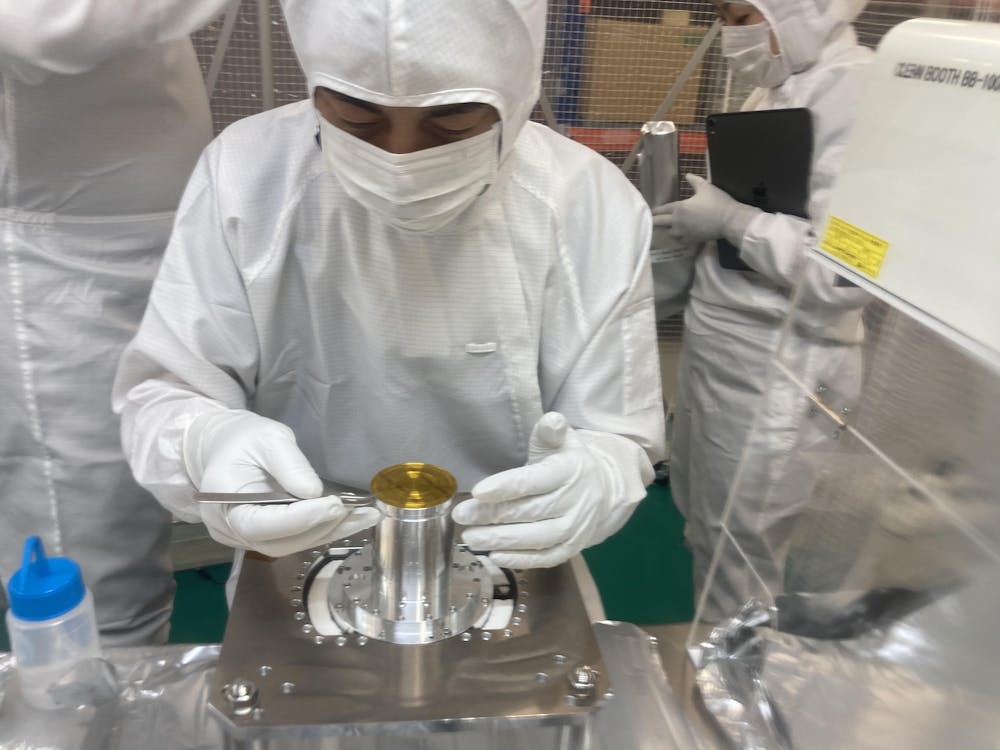
The sample capsule was removed from the spacecraft. It was in good shape, it had not exceeded 60℃ on reentry, and the capsule rattled when it was turned over, suggesting we did indeed have a solid sample. Its vacuum had been maintained, allowing whatever gases had been released from the asteroid sample to be collected, and a preliminary analysis of these was carried out in Woomera.
A year down the track, we know a lot more about that sample. In the past month, three papers have now been published concerning the first analysis of the Ryugu samples, including an article in Science this week concerning the relationship between the material seen at the asteroid, and the sample returned to Earth.
These observations open a window into the formation of the Solar System and helps to clear up a meteorite mystery that has puzzled scientists for decades.
Fragile fragments
All up, the sample weighs about 5 grams, split between the two touchdown sites that were sampled.
The first sample came from Ryugu’s exposed surface. To get the second sample, the spacecraft fired a small disk at the asteroid to make a little crater, then collected a sample near the crater in the hope this second sample would contain material from below the surface, shielded from space weathering.
The touchdown sampling was recorded by video cameras on board Hayabusa2. Through detailed analysis of the video, we have found the shapes of the particles ejected from Ryugu during the touchdowns are very similar to the particles retrieved from the sample capsule. This suggests both samples are indeed representative of the surface – the second may also contain some subsurface material, but we don’t yet know.