It’s a popular idea that the path to sustainability lies in high-tech solutions. By making everyday items like cars electric, and installing smart systems to monitor and reduce energy use, it seems we’ll still be able to enjoy the comforts to which we’ve become accustomed while doing our bit for the planet – a state known as “green growth”.
But the risks of this approach are becoming ever clearer. Many modern technologies use materials like copper, cobalt, lithium and rare earth elements. These metals are in devices like cell phones, televisions, and motors. Not only is their supply finite, but large amounts of energy are required for their extraction and processing – producing significant emissions.
Plus, many of these devices are inherently difficult to recycle. This is because to make them, complex mixes of materials are created, often in very small quantities. It’s very expensive to collect and separate them for recycling.
Among others, these limitations have led some to question the high-tech direction our society is taking – and to develop a burgeoning interest in low-tech solutions. These solutions prioritize simplicity and durability, local manufacture, as well as traditional or ancient techniques.
What’s more, low-tech solutions often focus on conviviality. This involves encouraging social connections, for example through communal music or dance, rather than fostering the hyper-individualism encouraged by resource-hungry digital devices.
“Low-tech” does not mean a return to medieval ways of living. But it does demand more discernment in our choice of technologies – and consideration of their disadvantages.
Origins of low-tech
Critics have proclaimed the downsides of excessive technology for centuries, from 19th century Luddites to 20th-century writers like Jacques Ellul and Lewis Mumford. But it was the western energy crisis in the 1970s that really popularised these ideas.
British economist E.F. Schumacher’s 1973 book Small is Beautiful presented a powerful critique of modern technology and its depletion of resources like fossil fuels. Instead, Schumacher advocated for simplicity: locally affordable, efficient technologies (which he termed “intermediate” technologies), like small hydroelectricity devices used by rural communities.
Schumacher’s mantle has been taken up by a growing movement calling itself “low-tech”. Belgian writer Kris de Dekker’s online Low-Tech Magazine has been cataloging low-tech solutions, such as windmills that use friction to heat buildings, since 2007. In particular, the magazine explores obsolete technologies that could still contribute to a sustainable society: like fruit walls used in the 1600s to create local, warm microclimates for growing Mediterranean fruits.
In the US, architect, and academic Julia Watson’s book Lo-TEK (where TEK stands for Traditional Ecological Knowledge) explores traditional technologies from using reeds as building materials to creating wetlands for wastewater treatment.
And in France, engineer Philippe Bihouix’s realization of technology’s drain on resources led to his prize-winning book The Age of Low Tech. First published in 2014, it describes what life in a low-tech world might be like, including radically cutting consumption.
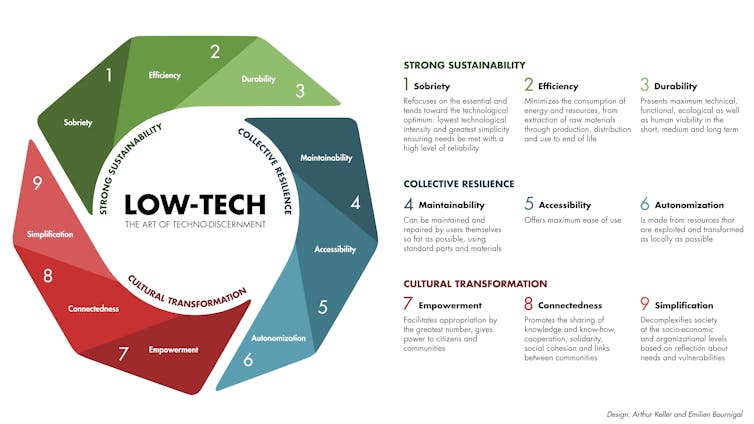
Bihouix presents seven “commandments” of the low-tech movement. Among others, these cover the need to balance a technology’s performance with its environmental impact, being cautious of automation (especially where employment is replaced by increased energy use), and reducing our demands on nature.
But the first principle of low-tech is its emphasis on sobriety: avoiding excessive or frivolous consumption, and being satisfied by less beautiful models with lower performance. As Bihouix writes:
A reduction in consumption could make it quickly possible to rediscover the many simple, poetic, philosophical joys of a revitalised natural world … while the reduction in stress and working time would make it possible to develop many cultural or leisure activities such as shows, theatre, music, gardening or yoga.
Ancient solutions
Crucially, we can apply low-tech principles to our daily lives now. For example, we can easily reduce energy demand from heating by using warm clothes and blankets. Food, if it’s packaged at all, can be bought and stored in reusable, recyclable packaging like glass.
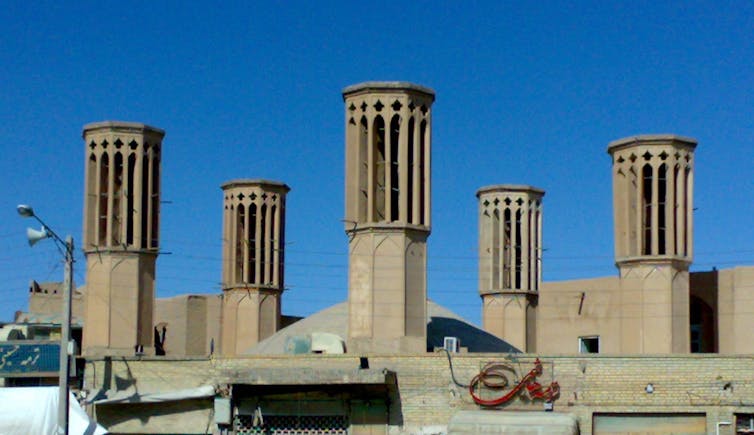
Architecture offers multiple opportunities for low-tech approaches, especially if we learn from history. Using ancient windcatcher towers designed to allow external cool air to flow through rooms lets buildings be cooled using much less energy than air conditioning. And storing heat in stones, used by the Romans for underfloor heating, is being considered today as a means of dealing with the intermittency of renewable energy.
Design and manufacture for sustainability emphasize reducing waste, often through avoiding mixing and contaminating materials. Simple materials like plain carbon steels, joined using removable fasteners, are easy to recycle and locally repair. Buses, trains, and farm machinery using these steels, for example, can be much more readily refurbished or recycled than modern cars full of microelectronics and manufactured from sophisticated alloys.
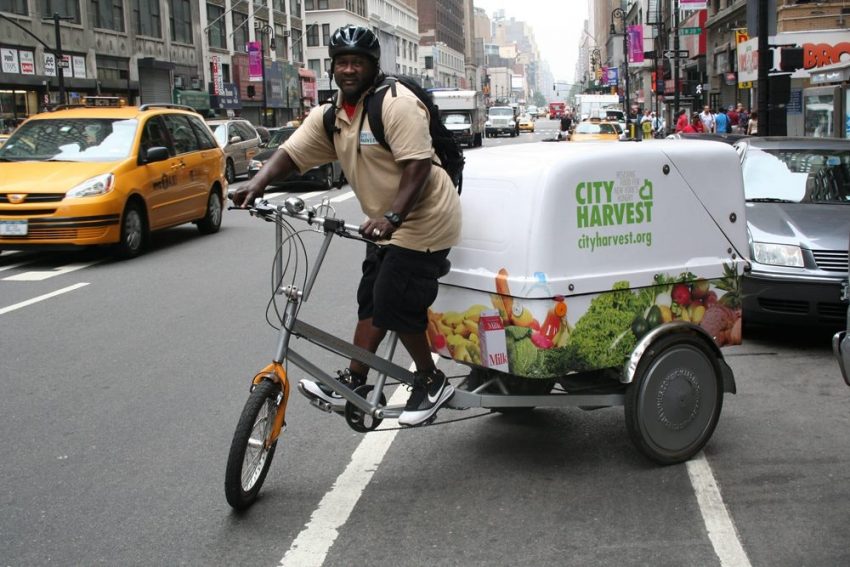
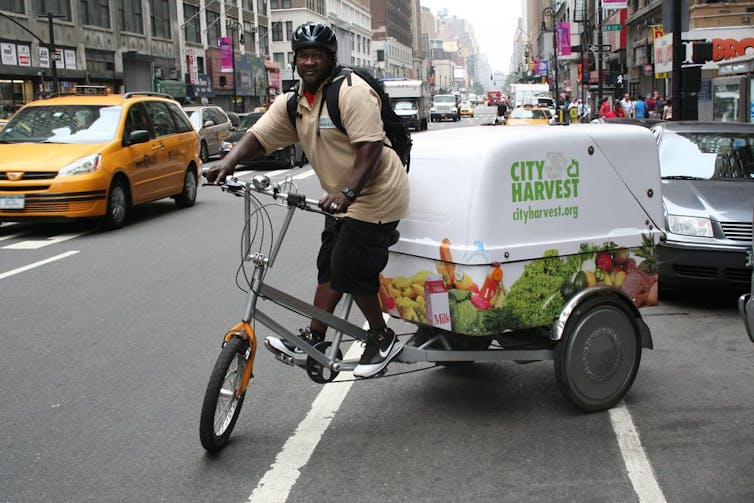
In some places, the principles of low tech are already influencing urban design and industrial policy. Examples include “15-minute cities” where shops and other amenities are easily accessible to residents, using cargo bikes instead of cars or vans for deliveries, and encouraging repairable products through right-to-repair legislation in the EU and US.
Meanwhile, in Japan, there’s emerging interest in the reuse and recycling practices of the Edo period. From 1603 to 1867, the country was effectively closed to the outside world, with very limited access to raw materials. Therefore, extensive reuse and repair – even of things such as broken pottery or utensils with holes that we’d now regard as waste – became a way of life. Specialist repairers would mend or recycle everything from paper lanterns and books to shoes, pans, umbrellas, and candles.
By following examples like these, we can make discerning technological choices a central part of our search for sustainable ways of living.
This article by Chris McMahon, Senior Research Fellow in Engineering, University of Bristolis republished from The Conversation under a Creative Commons license. Read the original article.