
It takes expensive tools to learn about the universe, but projects like the Very Large Array for radio astronomy in New Mexico and the Chandra X-ray Observatory, which orbits Earth, have pushed scientific knowledge forward in ways that would not have been possible without these instruments. Every 10 years, astronomers and astrophysicists outline priorities for the hardware they need in the decadal survey on astronomy and astrophysics. The newest version of the survey was published by the National Academies of Sciences, Engineering and Medicine in late 2021, and debates about funding are in full swing for the next fiscal year.
I’m a professor of astronomy whose research has depended on facilities and equipment built after a recommendation in one of these decadal surveys, and I was involved in the previous survey, published in 2010.
The most recent wish list is full of fascinating projects, and it will be exciting to see which get funded and what research will come from them.
A meeting of the minds
Every 10 years since the 1960s, U.S. astronomers and astrophysicists have gathered to create a priority list for new facilities and instruments.
The decadal survey of astronomers is influential because it forces everyone to be on the same page and make hard choices. It has to temper ambition with realism, but when astronomers and astrophysicists from the many subfields all work together, they come up with ideas that advance the whole field.
The most recent report is titled “Pathways to Discovery in Astronomy and Astrophysics for the 2020s.” It’s directed at Congress and the three federal agencies that fund most astronomical research: NASA, the National Science Foundation and the Department of Energy. Billions of dollars are at stake.
Producing the reports is a massive undertaking, involving 20 people on the main committee and over 1,000 contributing to the final report. The committee reviewed 573 white papers all arguing for specific projects and astronomical capabilities. The finished report runs 615 pages, and it’s not light reading.
This approach works. Some of NASA’s most ambitious and fruitful scientific missions – like the Hubble and James Webb space telescopes – were proposed in and funded through decadal surveys.

Big science
The committee identified 24 key science questions for the next generation of astronomy. These fall into three major themes that are science at the biggest scale, and the facilities on the wish list are designed to address these themes.
First is the study of Earth-like worlds. Thanks to explosive growth in the discovery of exoplanets, the number of known planets outside the solar system has been doubling roughly every two years. Among the more than 5,000 known exoplanets are several hundred that are similar to Earth and could potentially support life. A major goal for the next decade is to build new large telescopes on the ground and in space with instruments that can “sniff” the atmospheres of Earth-like planets to try to detect gases like oxygen that are created by microbes.
Second is to advance multimessenger astronomy – a relatively new field of astrophysics that takes information about gravitational waves, elementary particles and electromagnetic radiation and combines it all to gain deeper insights into the underlying astrophysics of the universe. In this case, the need is not so much for new scientific tools but for more grants to enable researchers to collaborate and share data. The science goal is to learn more about cosmic explosions and mergers of compact objects like neutron stars and black holes.
The final theme is the study of cosmic ecosystems, especially the origin and evolution of galaxies and the massive black holes at their centers. By looking at extremely distant galaxies, astronomers can look into the past, since light takes time to reach Earth. So to understand these massive, complicated systems, scientists will need giant optical telescopes to find galaxies far away in the young universe, as well as radio telescopes to peer into their dusty hearts and reveal the black holes.
Astronomy’s wish list
Here are a few particularly exciting highlights from the hundreds of items on the wish list.
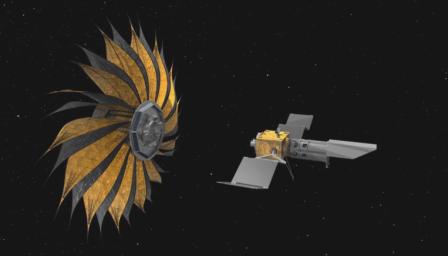
First, the report recommends spending US$1 billion on developing technology with which to build the next generation of “great observatories” in space. The flagship of these missions – to be launched in the 2040s with an eye-popping price tag of $11 billion – would be an optical telescope with a massive 20-foot (6-meter) mirror. This mirror would be eight times bigger than Hubble’s and would be designed to study Earth-like planets in other solar systems – and potentially detect life. The report also recommends building two smaller space telescopes to work at infrared and X-ray wavelengths, each at a cost of $3 billion to $5 billion.
But orbital efforts are not the only aims of the report. The report also asks for funds to build a giant optical telescope on Earth with a diameter of 80 to 100 feet (25 to 30 meters). That’s five to seven times the light-collecting area of today’s largest telescope. Two proposals are competing to build this telescope, which would cost close to $2 billion.
The report also calls for the National Science Foundation to spend $3 billion on a new array of 263 radio telescopes that would span the entire U.S. This telescope array could produce radio images with 10 times the sensitivity and 20 times the sharpness of any previous facility, allowing scientists to see deeper into the universe and discover previously undetectable objects. Another item on the wish list is a $650 million pair of microwave telescopes in Chile and Antarctica that would map the afterglow of the Big Bang.
This kind of money is needed to achieve scientific goals of this scope.
State of the profession
Science is more than just the pursuit of knowledge. As part of recent decadal surveys, astronomers, and astrophysicists have taken the opportunity to gaze inward and judge the state of the profession. This includes looking at diversity and inclusion, workplace climates and the contributions of astronomers to education and outreach.
These fields are overwhelmingly white, with people from minority backgrounds making up only 4% of faculty and students. In an appendix to the report, teams suggested a number of remedies for the lack of diversity and equity. These included ideas such as better mentoring to reduce the high attrition rate for minority students, along with funding for bridge programs to help minorities get established early in their careers and to treat harassment and discrimination as forms of scientific misconduct.
If even a small part of the wish list becomes reality, it will not only increase our understanding of the universe, but also – just as importantly – lead to a more diverse and compassionate astronomy and astrophysics community.
Article by Chris Impey, University Distinguished Professor of Astronomy, University of Arizona
This article is republished from The Conversation under a Creative Commons license. Read the original article.