
A raft of research, supported by startup developments, suggests drones inspired by nature are the future of flight.
Plans for the future of airborne transport include seeing a small army of drones competing for space in the sky with the 50 billion birds worldwide. But there’s also the potential of a halfway house, where drones that look like birds end up flying alongside the animals they’re inspired from and the traditional quadcopters.
A new raft of drones inspired by nature, many of which are university spin-offs, are capturing the attention of investors. Animal Dynamics, which was launched in 2015 as a spin-off from a University of Oxford project and has since raised £35 million, sells the Stork parafoil drone, which — while not looking much like an animal — includes inspiration from nature in terms of how it works. (A previous project, Skeeter, was more closely inspired by the movement of a dragonfly’s wings, including its flapping propulsion.)
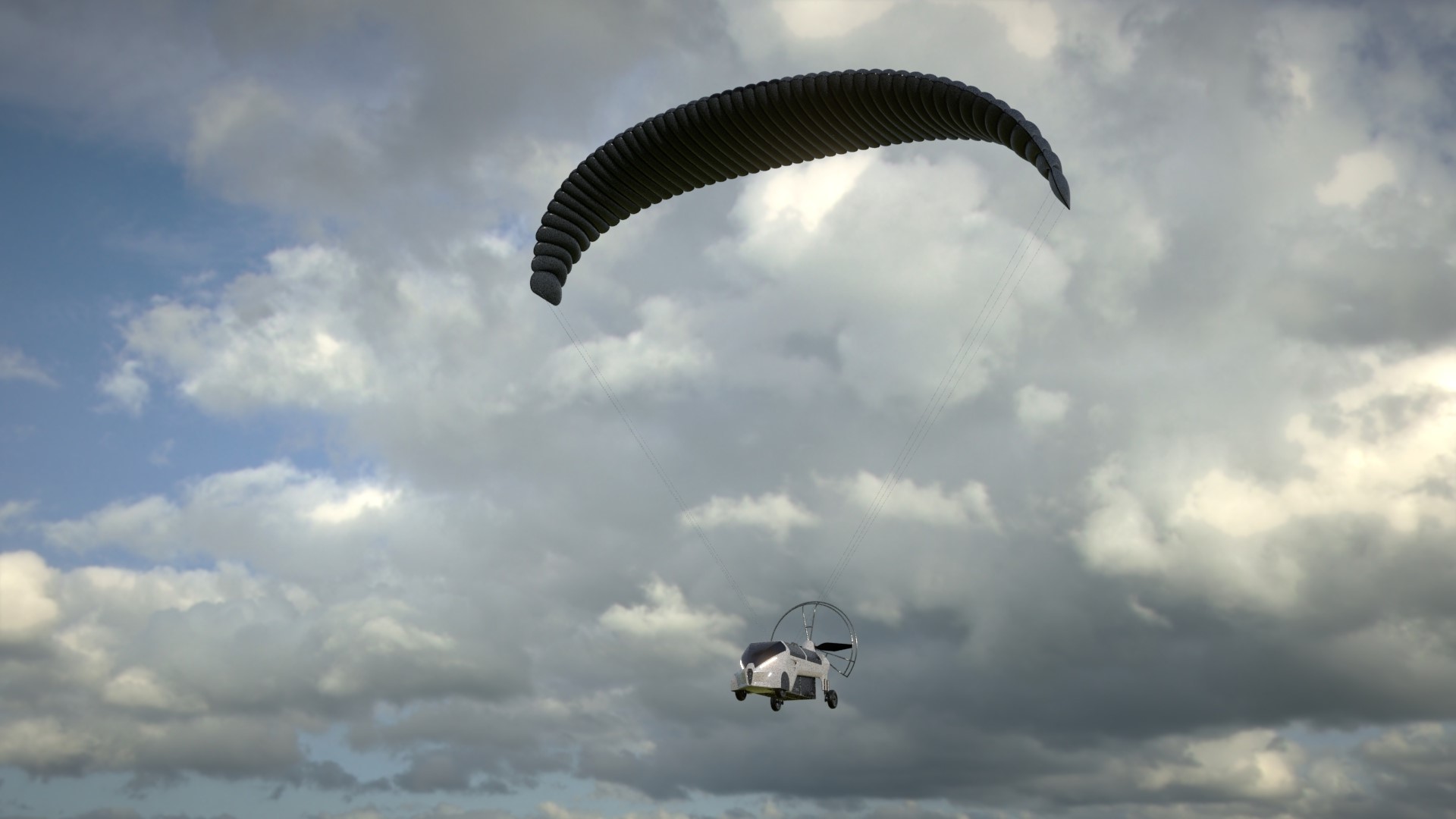
“We understand there are things within nature that have developed really excellent solutions to problems that we also face as humans,” says Ian Foster, Head of Engineering at Animal Dynamics, who is one of the 91 staff members at the firm.
That’s something Matěj Karásek sees echoes of in his own company. Karásek is the founder of Dutch startup Flapper (previously Flapper Drones), a spin-off from Delft University of Technology, which counts two employees and has raised €100,000 in seed money. The university project had been going for the best part of two decades, and was designed to try and develop a bioinspired drone that was lightweight.
The size and scale aspect is a necessary evil, Karásek says. “One of the key advantages of bioinspired drones is they need to be small because of the physics,” he explains. That enables them to do more detailed, fine-skilled tasks that bigger drones can’t — making a virtue out of what may initially seem like a limitation.
Creating a large nature-inspired drone runs into the same problem that the dodo had: it can’t fly. Small size brings another benefit as well: “If you keep them small, they’re very safe, not only because of their size, but because they have wings that are soft,” Karásek says.
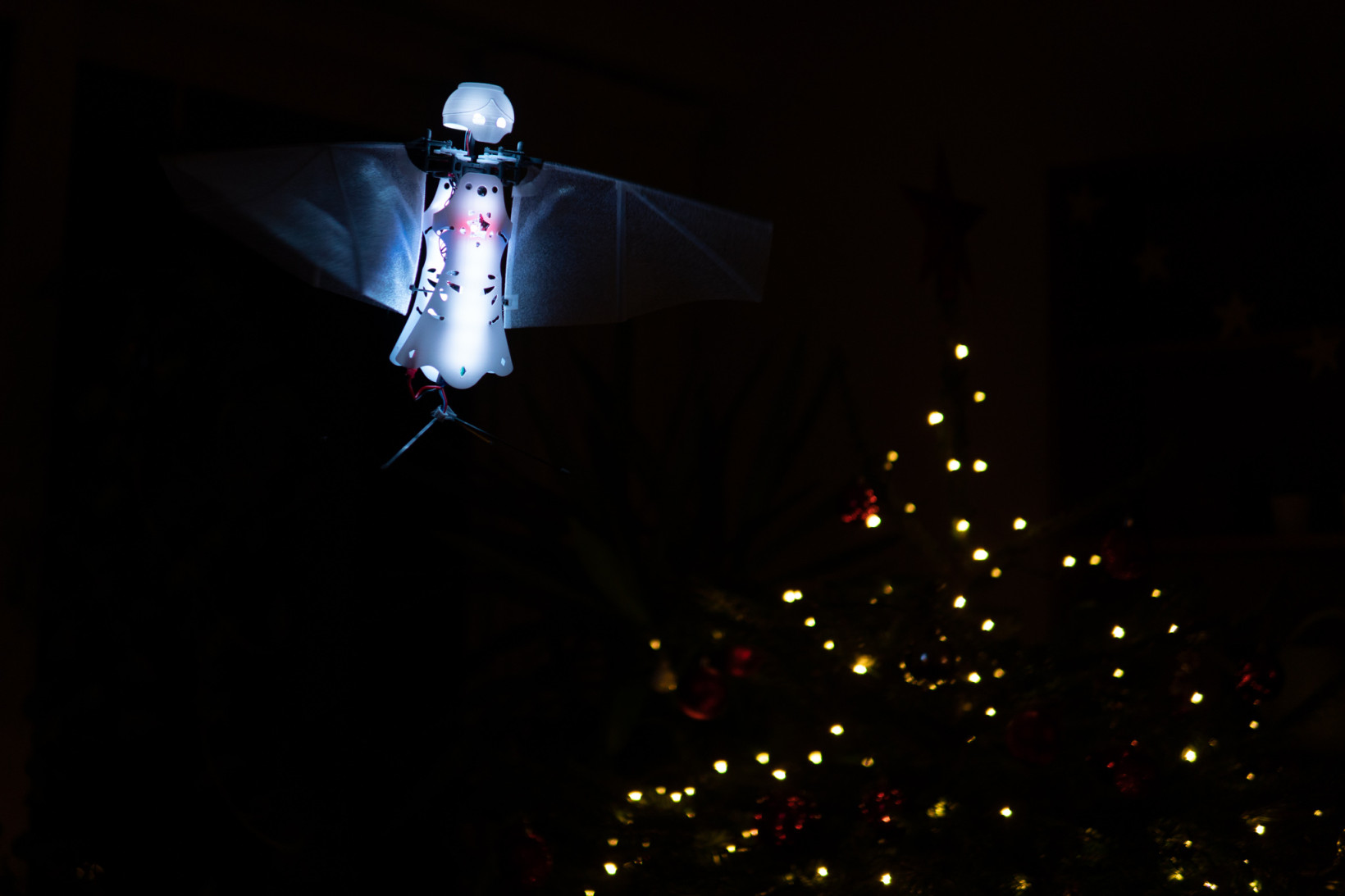
Christoffer Johansson of Lund University, part of a university research team that recently published a paper outlining the development of a robotic avian wing, also sees safety as one benefit of bioinspired drones.
“Quadcopters are sensitive to damage,” he says. “If they hit something, they break. Flapping ones might be less sensitive and potentially something that could restart again if it crashes.”
Points of differentiation
Animal Dynamics’ Stork drone doesn’t see size as an issue. Its parafoil can carry a payload of 135 kilograms up to 400km, thanks to the nature-inspired revolution of simply gliding for kilometres without powering the engine — something that Foster, the company’s Head of Engineering, believes makes it useful for work in less built-up areas.
“We want to be able to operate in places where they’re very remote,” he says. “We’re delivering aid to an area that has collapsed infrastructure. There isn’t going to be an airport there.”
But for drone companies like Flapper trying to find a niche in more built-up, populated environments, safety is one area where it sees its range of bioinspired drones as offering a key point of differentiation. “If you fly into something with a conventional drone, the sharp propellers could cut into things, but with soft wings, they actually bounce off objects,” Karásek says.
Flapper was founded in 2019 to solve an entirely different market need in the world of entertainment. Karásek envisaged his bird-like drones taking the place of actual birds in theme park shows. Then the pandemic hit, and demand in the sector suddenly cratered. Flapper has since looked beyond the entertainment industry, touting its drone as the world’s first commercially-available bioinspired drone that can hover in the air.
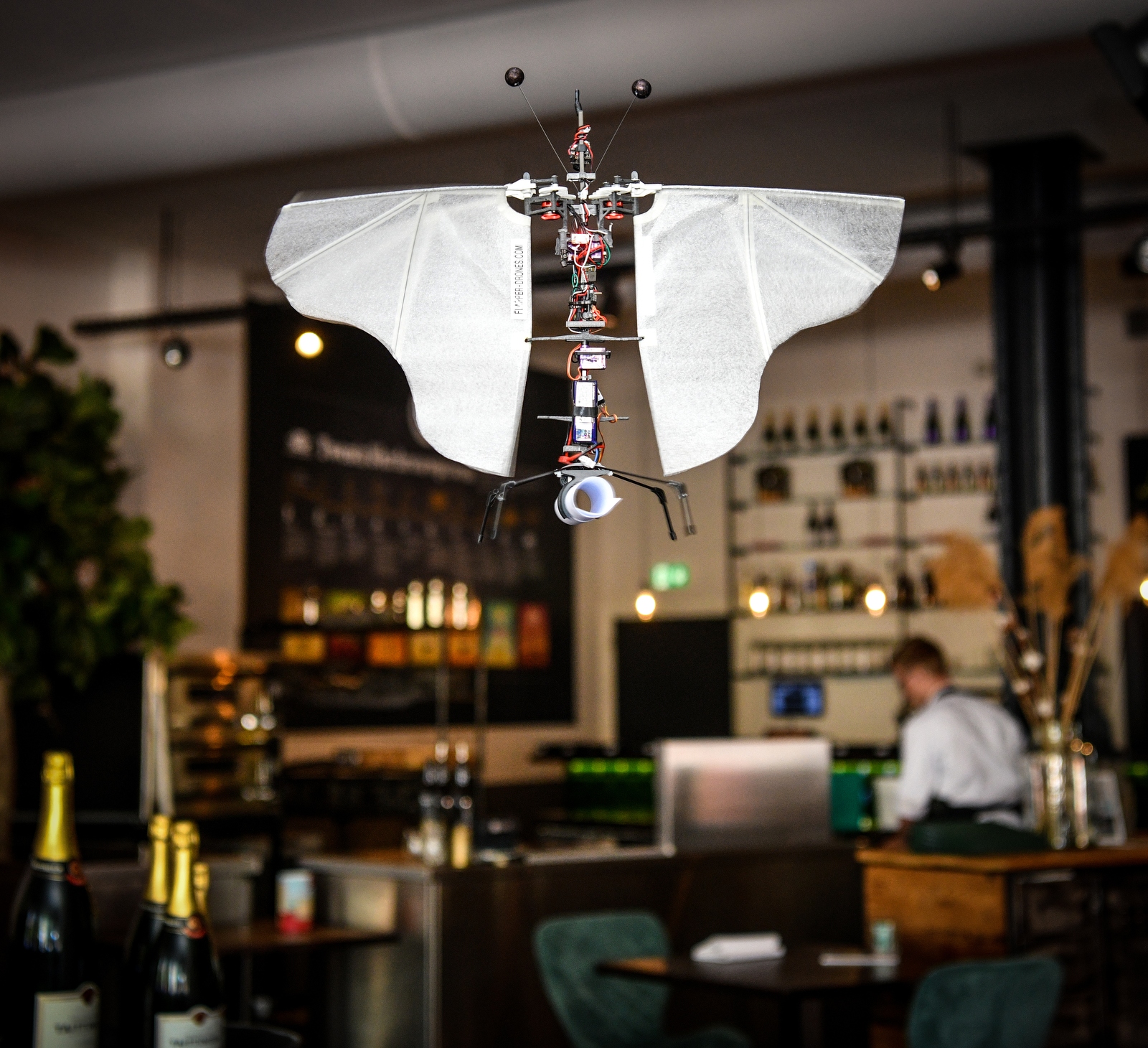
And it’s not just hovering that the new raft of bioinspired drones can do differently to quadcopters already on the market.
“There are still a bunch of things that animals do way better than mechanical drones,” says Arthur Holland Michel, author of a book on the history of drones. “The ability to perch on a range of surfaces and structures, for example. Or to take off and land vertically without using a lot of energy, to be nimble and fast in flight, or to fly for a really long time.” For those reasons, bioinspired drones hold huge promise,” says Michel.
Safety and subtlety
The lack of intrusiveness is one way in which Flapper hopes to market its wares. Alongside the drone’s ability to hover and its safety, should there be a collision, Flapper also says that it’s quieter than the more traditional quadcopter competitors. “It’s a different frequency,” says Karásek. “It’s not this high-pitched buzzing of a propeller, but it’s more low frequencies, less intrusive, and more pleasant.”
All of that is important, reckons the Flapper team, as drone use becomes more commonplace and integrated into our daily lives. The commercial drone sector is expected to grow at a compound annual growth rate of 24% each year to 2030, according to one industry analysis.
“As we use robots and flying robots more and more, we’ll be surrounded by them,” says Karásek. “Safety will become very important, because right now that’s what’s limiting the use of drones.”
Regulation is cited by both Karásek and Foster as one of the key curbing factors on their growth. “As we build confidence with regulators, we can expand out,” says Foster. “It’s a staged, incremental approach. It’s not a case of developing a product, selling it to someone, and away you go. The regulatory framework isn’t there at the moment.”
Even if it were, these bioinspired drones have their drawbacks. The most sci-fi-like plans for the future use of drones include carrying relatively large payloads, freeing up road networks from cargo trucks, and instead putting the transportation of products into the sky. That’s something that bioinspired drones will struggle with.
Right now, Flapper sells drones with a 50cm wingspan, which Karásek calls “quite large”. The company plans to miniaturise, rather than expand, the size of the devices. With the current state of tech and hardware, Karásek believes it’s possible to make his drones half the size they currently are, but that includes trade-offs, thanks to limitations on actuator technology.
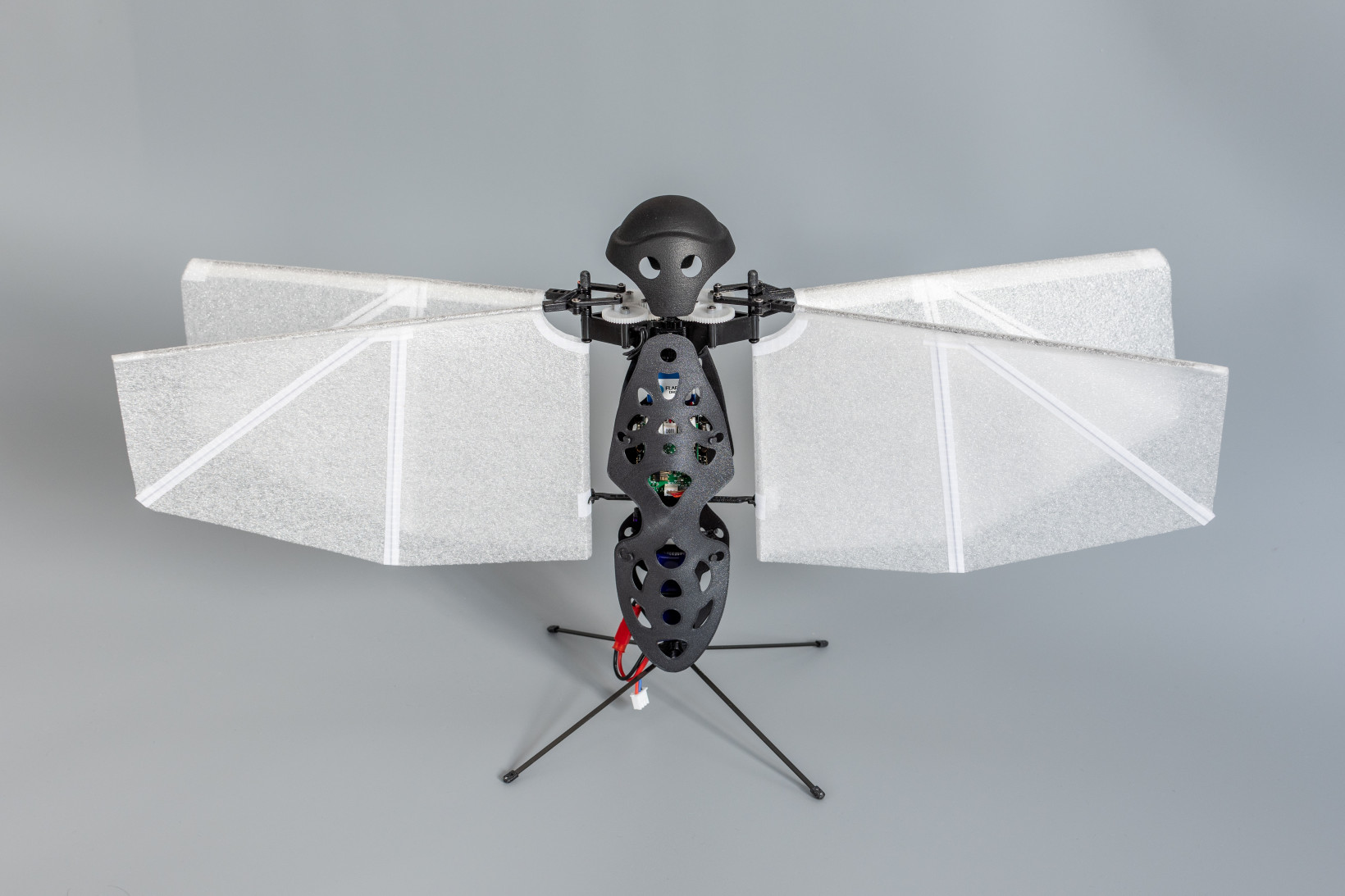
Karásek declined to share the number of drones Flapper had sold, but said the company was focused more on quality, than quantity — and was seeking to find markets outside the mainstream.
“If we compete against toy manufacturers, they’ll just copy us,” Karásek claims. “If we compete against [giant Chinese drone manufacturer] DJI, they’ll just copy us as well. We’re trying to find our own way to keep developing the technology but keeping our niche.”
The current focus on bioinspired drones reflects an interest in the romantic nature of the drone, reckons Michel.
“Beyond their potential practical benefits, bioinspired drones also have a significant narrative power,” he says. “They just seem so futuristic, and they tap into a primal human fascination. A drone that looks like a bat or an eagle is far more likely to generate interest than a regular old quadcopter.”
The nature-inspired designs also benefit from a broader push towards sustainability, reckons Foster.
“Nature is very efficient,” he says. “Nature doesn’t have an awful lot of energy to throw around. We’ve been through a phase as humans where energy was cheap. You could mine another bit out of the ground and throw some more fuel on it.”
The niche of bioinspired drones is also one that European countries feel better placed to tackle, rather than competing with Chinese and US giants on more mainstream drones, which have incumbent companies that are already well-established. The point of differentiation is key in a competitive, growing sector. And in a space where off-the-shelf drones are traditionally seen as quadcopters, these more bioinspired versions stand out.