
On Christmas morning last year, dozens of households in the Republic of Ireland woke up to a hot water tank that had been heated overnight – for free.
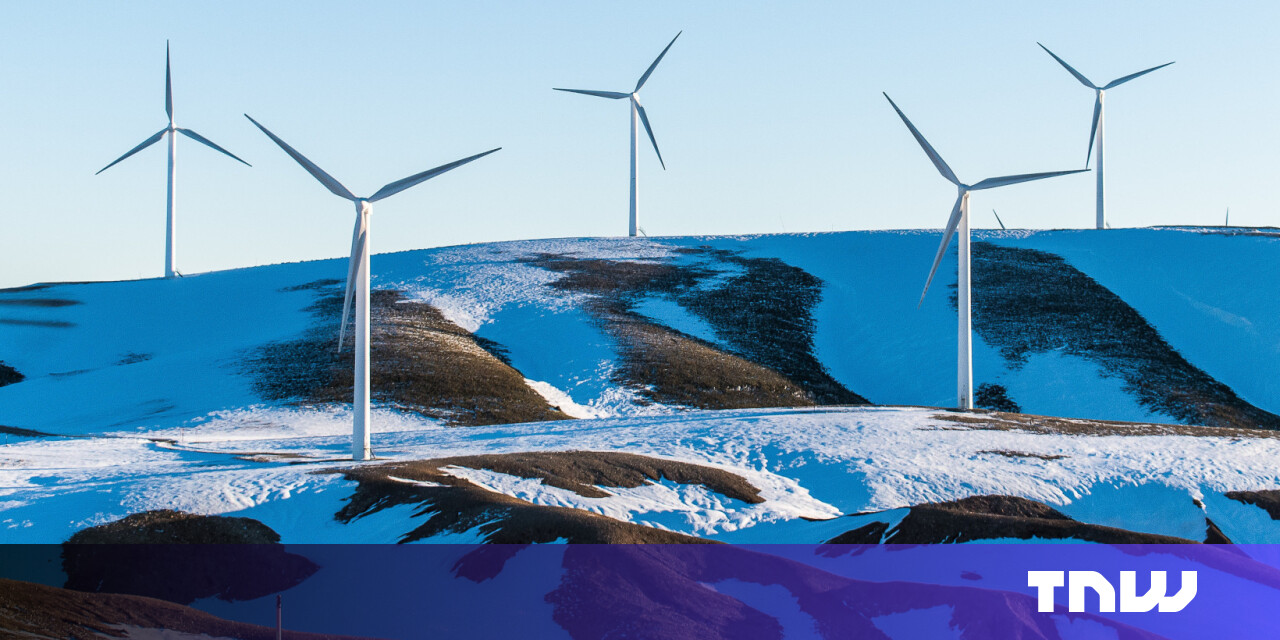
These households were part of a pilot run by the pioneering social enterprise EnergyCloud, which has found a way of using surplus wind energy on blustery nights to help people who are experiencing fuel poverty.
All it takes is the installation of a special switch that allows EnergyCloud to activate water heating when there is bountiful energy on the grid. People can still heat their hot water tank via a manual switch whenever they choose and they can also switch the whole system off if they are away from their home for a time.
“We can remotely send a message that clicks on your hot water and heats up your immersion at night-time,” explains Derek Roddy, co-founder of EnergyCloud. He adds that free water heating was delivered multiple times last year, not just on Christmas morning.
Energy prices in Europe have soared in the last couple of years, due to shifts in demand during the pandemic and, more recently, Russia’s invasion of Ukraine. This has triggered a worrying rise in fuel poverty but efforts to help are afoot. Renewables, in particular, could be coming to the rescue.
EnergyCloud is a non-profit social enterprise with a voluntary board of 11 people. Funds and technologies are donated by EnergyCloud partners, including Roddy’s firm Climote, energy provider SSE Airtricity and Amazon Web Services.
People who receive free hot water get text message alerts so that they know when it is available. “It is making a difference in people’s lives,” adds Roddy.
Hot water tanks, he says, can be reimagined as batteries: “A typical hot water tank would store 6 kWh of energy in hot water, which is a staggering amount of energy.” If you added up all the hot water tanks in Ireland, you would get a total of around 6 GWh.
Costing the surplus
Surplus energy from wind farms is an increasingly expensive problem. In 2022, the UK’s National Grid paid £215 million to shut off wind generation when the electricity wasn’t needed – a cost that gets passed on to consumers, further raising prices. EnergyCloud has found a way of using surplus energy while also helping people who might be struggling to pay their energy bills.
Everyone, in theory, benefits from this – not least because a lack of heating and hot water can cause or aggravate health problems. The UK’s Building Research Establishment estimates that cold homes, in England alone, cost the National Health Service more than half a billion pounds each year.
Other initiatives to help households experiencing fuel poverty in the past have included a programme in Scotland that installed Tesla Powerwall batteries in more than 100 homes, though Roddy notes that the costs are minimal when you are able to divert energy to existing hot water tanks instead.
EnergyCloud says it aims to install its remote-controlled hot water tank switches in at least 10,000 homes by the end of the year and the enterprise is already planning to expand into Northern Ireland and Scotland.
“It’s a really interesting concept,” says Marilyn Smith at the non-profit EnAct, which researches social issues around energy consumption. However, she notes that some people might hesitate to allow the installation of remotely controlled equipment in their homes. So far, that hasn’t been a barrier for EnergyCloud. All participants have been voluntary and Roddy says 65,000 additional homes have already expressed an interest in joining.
A ‘public good’
Smith argues that emerging energy companies are increasingly presenting renewables (and surplus electricity) as a potential “public good”. Other European ventures have sought to help low-income households around the world access renewable energy directly. Take Trine, a 16 person-strong firm based in Sweden that allows people to invest in solar energy projects in Africa, Asia and Central America. More than €80 million have been raised via the platform so far.
“There’s plenty of technology out there – batteries, panels, converters,” says Trine founder Christoffer Falsen. “It’s really about being able to accelerate that with the injection of capital.”
He explains that Trine-funded schemes can, for example, allow a household in Kenya to purchase a solar panel in instalments, enabling them to access cheaper electricity and move away from fossil fuel generators, which are extremely common in much of Africa. To date, nearly 3 million people worldwide have accessed electricity from renewables funded by Trine’s investors.
Although it was “unthinkable” before, Falsen says Trine may soon allow investors to support renewables projects in Europe as well: the rise of energy prices on the continent means increased profitability from energy projects, so the potential returns have risen, too. Previously, European ventures were not attractive enough in this regard.
“I think there will be a bigger push for energy independence and that, I think, will be very good for this entire sector,” says Falsen. He notes, however, that there are questions over whether high energy tariffs in Europe will continue, adding to uncertainty for investors.
Electricity at cost
Europe’s growing cadre of “energy communities” – groups of households that buy into generation projects such as small-scale wind farms – already understand that energy independence can shield people from the highest bills.
A long-running example is the community in Eeklo, Belgium that benefits from wind energy harnessed by EcoPower. It provides electricity to customers more or less at cost.
“We have a lot of wind in our region,” says Jan de Pauw, project engineer at EcoPower. There are 65,000 EcoPower members in Flanders, of which a few thousand live in Eeklo. The company has a headcount of around 50 people, operates a total of 20 windfarms in Flanders, and has raised €60 million of citizen-invested capital to date.
“People become members of EcoPower not because they want to earn a lot of money and have a high dividend but they want to have access to locally produced energy at a fair price,” says de Pauw.
The advantages have become clear during the last 12 months, as energy bills rocketed in Europe. EcoPower estimates that its members saved around €700 on their total bill for 2022. To become a member, households must buy a single share for €250 but people experiencing fuel poverty can pay this off in tiny instalments of just €3.50 a month for six years.
Similar schemes are blooming around Europe, including Ripple Energy in the UK.
With more and more renewable generation on the continent, expect to see increasing opportunities for sharing or cheaply distributing energy in the forms described above.
There could be other impacts of all this, too, as well as helping people in low income or fuel-poor households. Roddy says that, once participants in the EnergyCloud pilot heard that their free hot water would come from local wind farms, they expressed glowing acceptance of renewables. (TNW asked to speak to a participant but were told none was forthcoming.)
Big, white and pointy onshore turbines have occasionally been described as eyesores by some. But schemes such as EnergyCloud, which make clear the potential financial benefits of renewables, could change attitudes, argues Roddy.
“People got this straight away. This was not a hard sell,” he says. “I think we’ll have people literally approaching their elected representatives insisting that there’s wind farms and solar farms built in their area.”