
People don’t just fly kites for fun. At a test site near Munich, engineers recently launched an electricity-generating, box-style kite fitted with small, wind-catching rotors. The contraption, tethered to the ground by a hefty cable, flew repeatedly in a predetermined figure of eight — its rotors spinning in the wind.
“The wind speed is a couple of times higher than that a conventional wind turbine would see,” says Maximilian Isensee, chief executive of Kitekraft, explaining how the very movement of the kite itself boosts power generation. “That’s why we can get away with much smaller rotors.”
The figure of eight means the kite reverses direction as it flies, so the tether does not get twisted, which it would if the kite simply flew in a circle.
Wind energy is going from strength to strength, with 17% of Europe’s electricity needs met by wind generation in 2022. The International Energy Agency says that the supply of renewable energy must keep expanding, by 13% annually in total, between now and 2030 in order for the world to meet net-zero targets.
Flying high
Novel technologies that could make wind energy more accessible, or enable the construction of huge three-bladed turbines, are emerging from a raft of new European startups. Their innovations hint at a future where electricity generation from wind is much more eclectic than it has been up till now.
Kitekraft, for one, has raised €2.5 million in funding to date, 25% of which has been in the form of grants. The firm has eight employees. Their prototype is a quarter scale version of the first commercial product Isensee and colleagues hope to release – a kite with a capacity of 100 kilowatts. This would require a lengthy tether, extending to 150m.
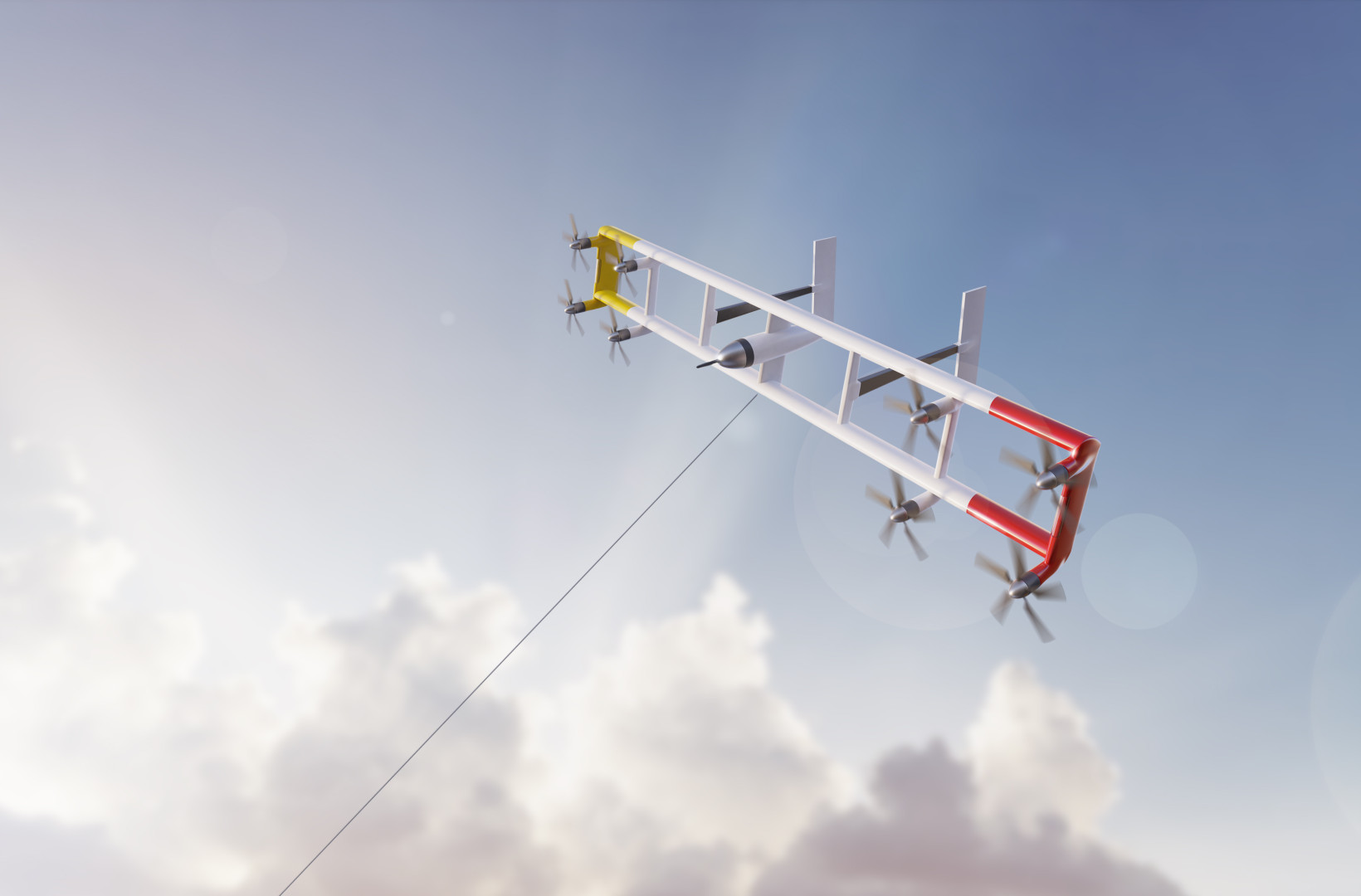
But Kitekraft wants to go bigger still and build huge kites in the megawatt range – with tethers longer than 300m. Such machines might fly at altitudes comparable to the height of the Empire State Building in New York.
Isensee says the kites will have an operating window comparable to traditional turbines and could fly in outdoor wind speeds between roughly 5 m/s and 25 m/s. Sensors onboard detect excessive winds and can trigger the automatic reeling in of the kite, so that it returns to the ground. The team is testing some cameras and sensors that could detect birds and avoid potential bird strikes, Isensee adds.
Using a kite to catch the wind is an interesting idea, says Richard Cochrane at the University of Exeter, who sometimes consults for the wind energy industry. “It could enable deployment of wind [energy technology] on perhaps an island that you couldn’t get a normal turbine onto,” he adds. Isensee confirms that the system uses roughly 90% less material than conventional wind turbines and so shipping the kites to hard-to-reach or remote locations would in principle be much easier.
This year, Kitekraft aims to continue its test flights and is targeting its first commercial installations around 2028.
No diesel required
Separately, an Iceland-based firm has come up with a small, vertical axis wind turbine that could power telecommunications towers and other relatively remote infrastructure. Icewind’s device is a sort of open, curved cylinder spinning within a metal frame. “It’s roughly the size of a refrigerator,” says Stephen Drake, chief executive.
The firm, which has three full-time employees and has raised $4 million to date, has used high-torque generators in these turbines, which means they rotate rather slowly. One device can output around 600 watts in winds of 10 metres per second, which is not a huge amount of power, but several sited and chained together could power a phone mast, says Drake.
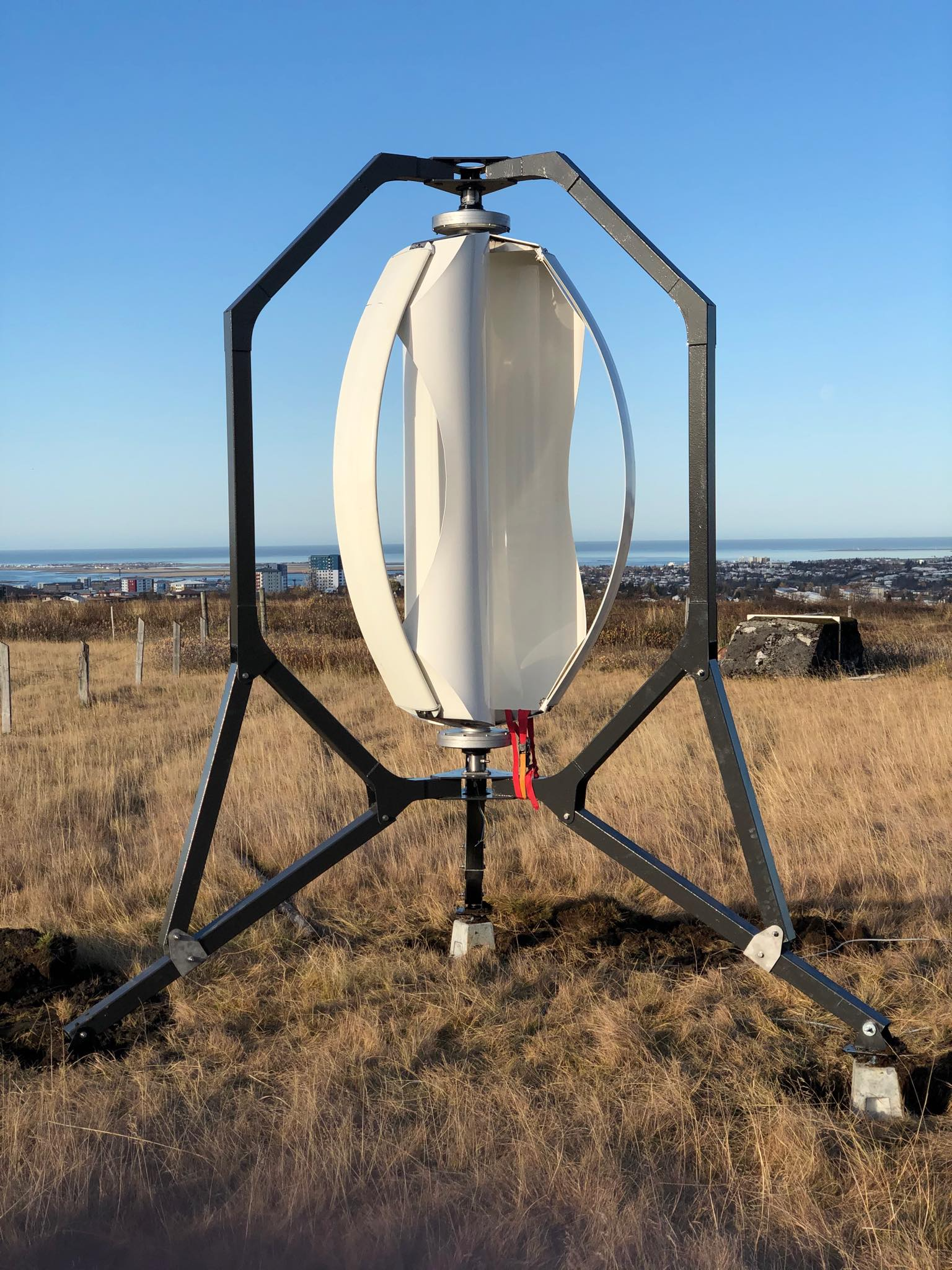
Around a million telecoms towers around the world are located in areas with poor or no electricity grid connections. Thus, they currently rely on diesel generators for power. Now the telecoms industry is searching for cleaner alternatives that could include turbines such as Icewind’s. “We knew it was an instant fit,” says Drake. Each turbine costs around $8,000 at present and the firm plans to deliver its first commercial devices to customers this year.
Back to the roots
New technologies could even change how conventional, supersized three-bladed turbines are constructed. These machines, especially those positioned offshore, are reaching gargantuan proportions, with the tallest standing nearly 300m tall at the nacelle – the point where the three blades meet. The impressive height is advantageous given that winds tend to be stronger at greater altitudes, which increases electricity production.
The proportions of these behemoths create a problem, however, because the turbine towers are increasingly difficult to construct and transport. They are also very heavy. Traditional tower materials require special reinforcement for the largest turbines.
“The weight of the structure itself becomes an issue,” says Otto Lundman, co-founder and chief executive of Modvion. His firm has developed a way of making turbine towers out of a completely different material: wood. Specifically, laminated veneer lumber.
“It’s kind of like large-scale plywood,” says Lundman. These layers of wood glued together are robust despite also being relatively light in weight, allowing for the construction of towers that are about 30% lighter than traditional versions. Modvion’s approach is to build modular towers in the form of circular sections, which can be shipped easily and then stacked on top of one another on site.
The company has 34 employees and has netted funding of SEK210 million (€18.8 million) to date.
There is huge demand in the wind energy market for materials that could enable the construction of even bigger turbines, notes Cochrane: “Generally, that is the way the industry has gone.” Wood-based modular approaches are primed to further the industry’s ambitions, he suggests.
While wood is in principle a carbon sink, the sustainability of this ancient building material and the biodiversity of forested areas relies on responsible forestry practices, which Lundman says Modvion is committed to. The company’s largest suppliers are based in Finland but its manufacturing base is in Modvion’s native Sweden.
This year, the firm aims to erect one two-megawatt turbine, 105 metres tall at the nacelle. Production of larger turbines with wooden towers is pencilled to commence late next year or early 2025.