Thousands of hills across Britain could be transformed into renewable energy batteries thanks to a new ‘high-density’ hydropower system buried underground.
Developed by UK startup RheEnergise, the system puts a modern spin on pumped storage hydro, a centuries-old technology which accounts for 95% of today’s energy storage capacity. Pumped storage hydro uses surplus electricity to pump water into an uphill reservoir, later releasing it back downhill over a set of turbines and into the original lake, generating electricity on demand.
Except RheEnergise’s hydro system doesn’t use water at all, but a proprietary high-density fluid. Named R-19 it is 2.5 times denser than water. While the company is all hush-hush about the chemistry behind the gloop, it is said to be made from “ultra-cheap” materials and is non-toxic to the environment.
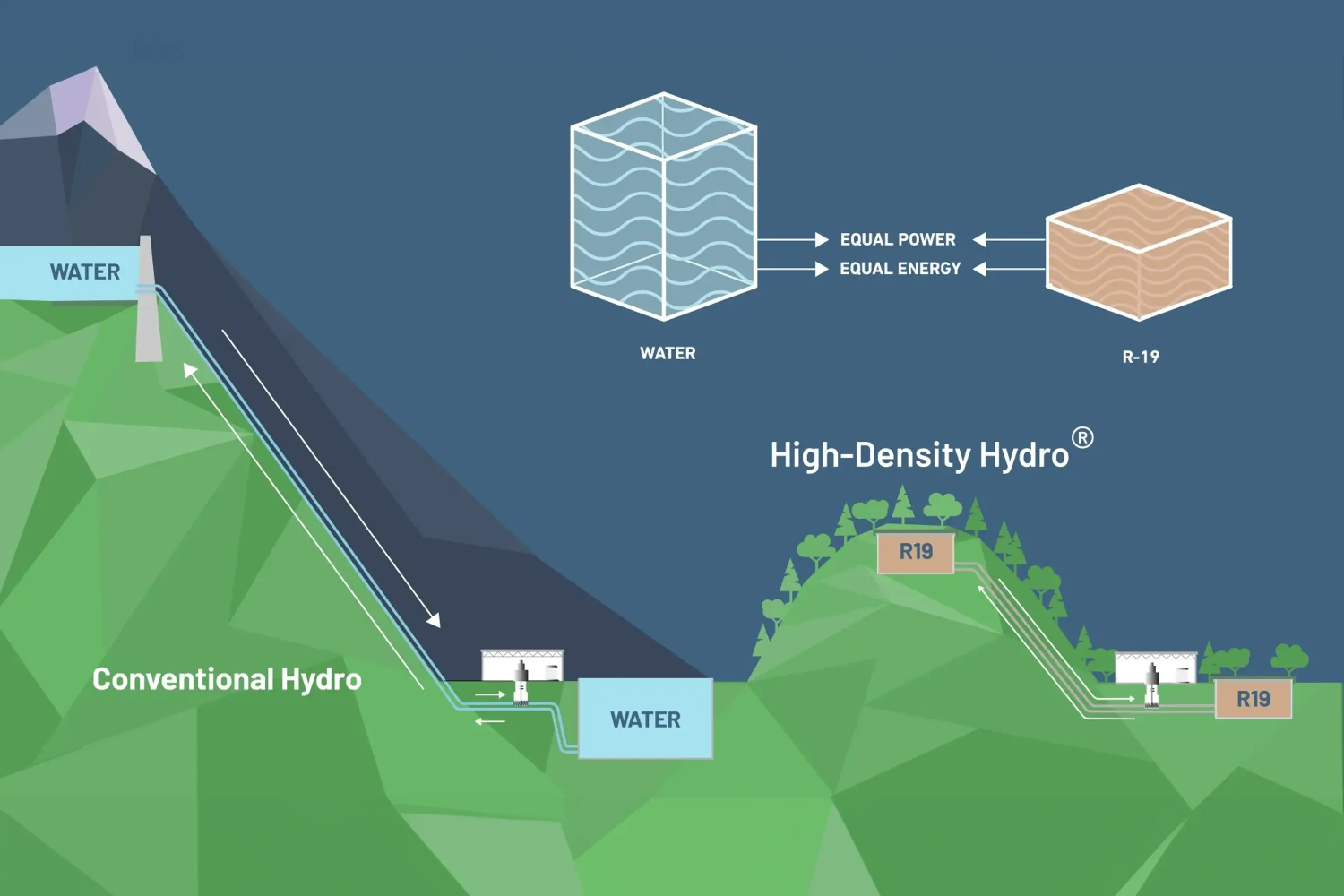
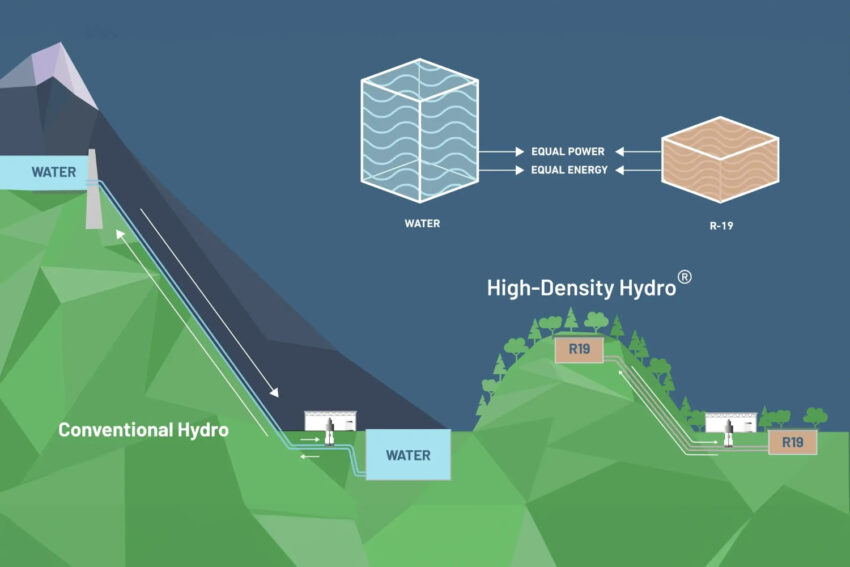
The benefit of using this fluid instead of water is it generates the same amount of electricity from just 40% of the elevation change, using tanks 40% of the size — think hills and underground tanks instead of mountains and huge dams. This means a smaller system that can be deployed faster, at more sites, and with fewer costs, or at least that’s the idea.
The high-density hydro system will pump R-19 uphill into underground storage tanks larger than an Olympic-size swimming pool, and then release the fluid on demand. Projects will range from 5MW to 100MW of power and can work with vertical elevations as low as 100 metres or less.
RheEnergise commercial director Sophie Orme said that with the urgency to decarbonise the UK’s energy system, it is significant that their system can be built in “one to two years” and gain planning consent “in just months.”
The company estimates that there are 6,500 potential sites in the UK alone and that its projects will be cheaper than equivalent lithium-ion batteries.
We need long-term energy storage
As European countries decarbonise their energy systems, adopting energy storage solutions to balance the intermittent supply of renewable energy and increase energy security is becoming increasingly urgent. According to the European Association for Storage of Energy (EASE), the EU will need 200GW of energy storage by the end of the decade and 600GW by 2050.
Proponents of alternative energy storage technologies argue that lithium-ion batteries will only get us so far. Their production relies on mining, they don’t have very long lifespans and are arguably not ideal for storing energy longer than several hours. Long-term storage solutions are critical.
“Our HD Hydro technology can provide medium and long-duration energy storage, which is becoming increasingly important as the UK’s energy system is increasingly reliant on intermittent renewables,” said Stephen Crosher, RheEnergise’s chief executive.
This ‘slow-burn’ energy storage is essential to stabilise the grid when the wind isn’t blowing or the sun isn’t shining. Other startups working in this space include Scotland’s Gravitricity, which plans to create electricity by dropping weights down old mine shafts, and Finland’s Polar Night Energy which uses giant vats of sand to store energy in the form of heat.
While these solutions sound really cool, RheEnergise has the advantage that its approach builds upon a tried and tested technology.
RheEnergise has just signed an agreement with UK company Mercia Power Response, aiming to deploy 100MW of energy storage by 2030 using Mercia’s existing grid connections. In November, the company also won a £8.25m grant from the UK government to build a small 250kW demonstrator at a mine in Devon within the next year.
“We are also pursuing a number of project opportunities elsewhere in continental Europe and Canada,” said Crosher, following the announcement last year. “We expect to have our first 5MW grid-scale project in operation in 2026.”