
It’s been nearly 2,000 years since Vesuvius’ eruption buried the vibrant Roman city of Pompeii under a deadly blanket of ash.
The eerie ruins and the famous casts of Pompeii represent an invaluable window into the dramatic event. However, one of the most pressing questions about that day remains: what exactly was the cause of death of the victims?
Applying a new research and technological method, a European team led by the University of Valencia has determined that a number of the fossilised Pompeians died of asphyxiation — and not from dehydration or heat as previously theorised.
The researchers performed non-invasive chemical analysis on six casts, using portable X-Ray fluorescence devices for the first time, in order to uncover the elemental composition of the bones. They then compared the findings to other cremated bone samples from the Ostiense Necropolis in Rome and and buried bones from the Islamic necropolis of Colata in Valencia.
The results of the bone analysis isn’t the sole evidence pointing towards asphyxiation. Another fact supporting the theory is the body position of the victims — appearing in a relaxed stance, lying down or stretched out, and some even covering themselves with garments.
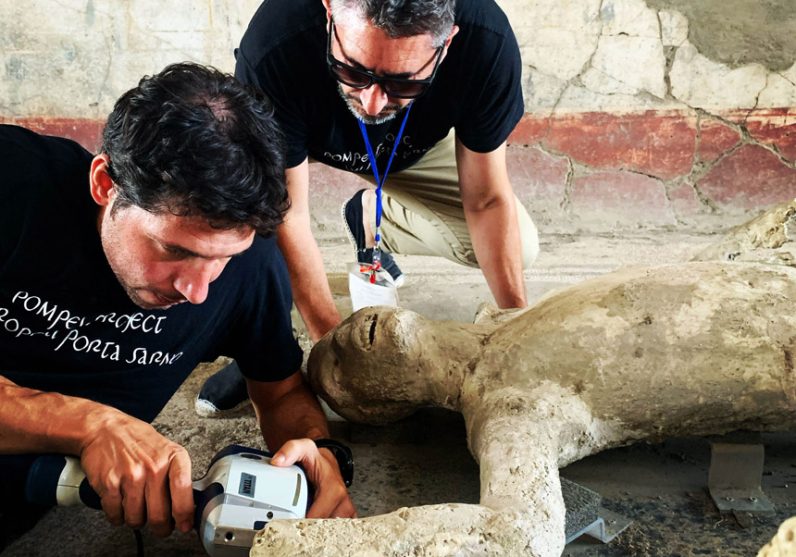
The researchers suggest that these six people were attempting to flee Pompeii after the rain of small tephra rocks ended. They were killed by the second phase of the eruption, which emitted a high concentration of ash and toxic volcanic gases. Bone evidence also shows that the individuals were exposed to the extreme temperatures of pyroclastic waves and lava only postmortem — suffering an effect similar to cremation.
It’s estimated that the six Pompeians lost their lives about 20 hours after the first eruption.
According to the team, the results of the research can not only help reconstruct the events surrounding the demise of these individuals, but also shed light on other causes of death during Vesuvius’ eruption. This is particularly important, as the asphyxia suggestion is limited to the six samples. It’s likely that the catastrophic event killed people in different ways.
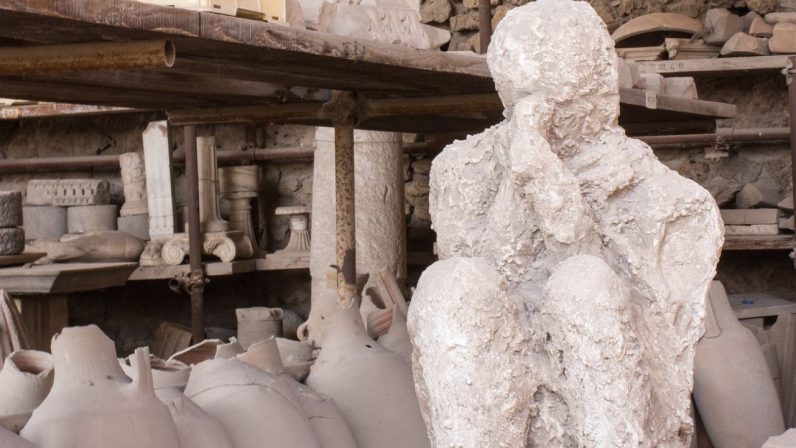
The study demonstrates yet another case of how advanced technologies are ushering us onto a new era of archaeological knowledge and heritage preservation. Think of excavation robots, or the use of space tech for the documentation and discovery of historic sites.
Business opportunities are also emerging, with a significant number of European startups active in this yet uncrowded field. A notable example is UK-based ArchAI, founded by archaeologist-turned-computer scientist Iris Kramer. The company uses AI models to automatically detect archaeological sites on earth observation data.