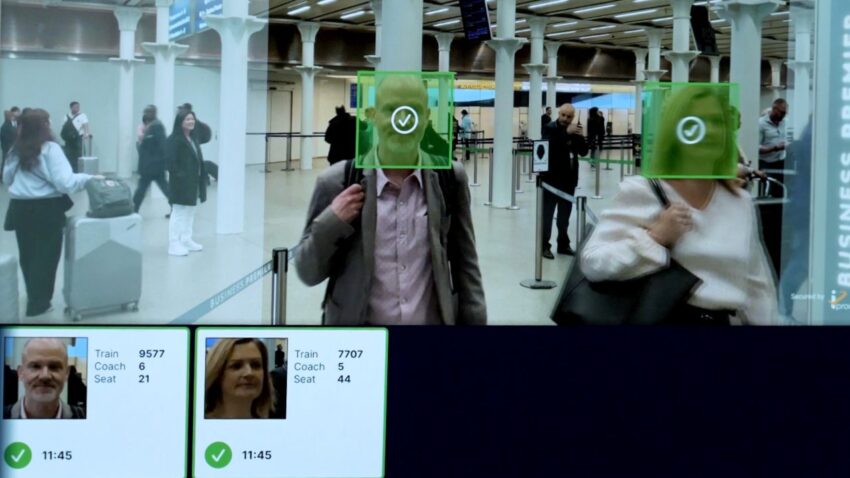
Britain is set to test facial verification tech that removes the need for passports, but experts have dashed hopes of a full launch this year.
The project was unveiled this week by Phil Douglas, the director-general of the UK’s Border Force. Douglas told the Times that he aims to install new e-gates at airports that create an “intelligent border.” By integrating enhanced facial verification, the system would make physical travel documents unnecessary.
Trials of the tech are expected to start this year. A full rollout, however, remains a more distant prospect.
Andrew Bud, the CEO at British biometric leader iProov, told TNW that facial verification “is not going to replace passports at UK airports in 2024.” Nonetheless, he’s confident that the switch will “certainly come” later.
Bud speaks from a unique experience with the tech: iProov created the first-ever biometric corridor for train travel, which opened last July at Eurostar’s London terminal.
Building digital borders
iProov’s system replaces border checks with a facial verification checkpoint that you just walk straight past.
Before travel, the passenger downloads the app, authenticates their ID, scans their face, and links their ticket. On arrival at St Pancras Station in London, they stroll through a dedicated lane for the tech, which verifies their entry.
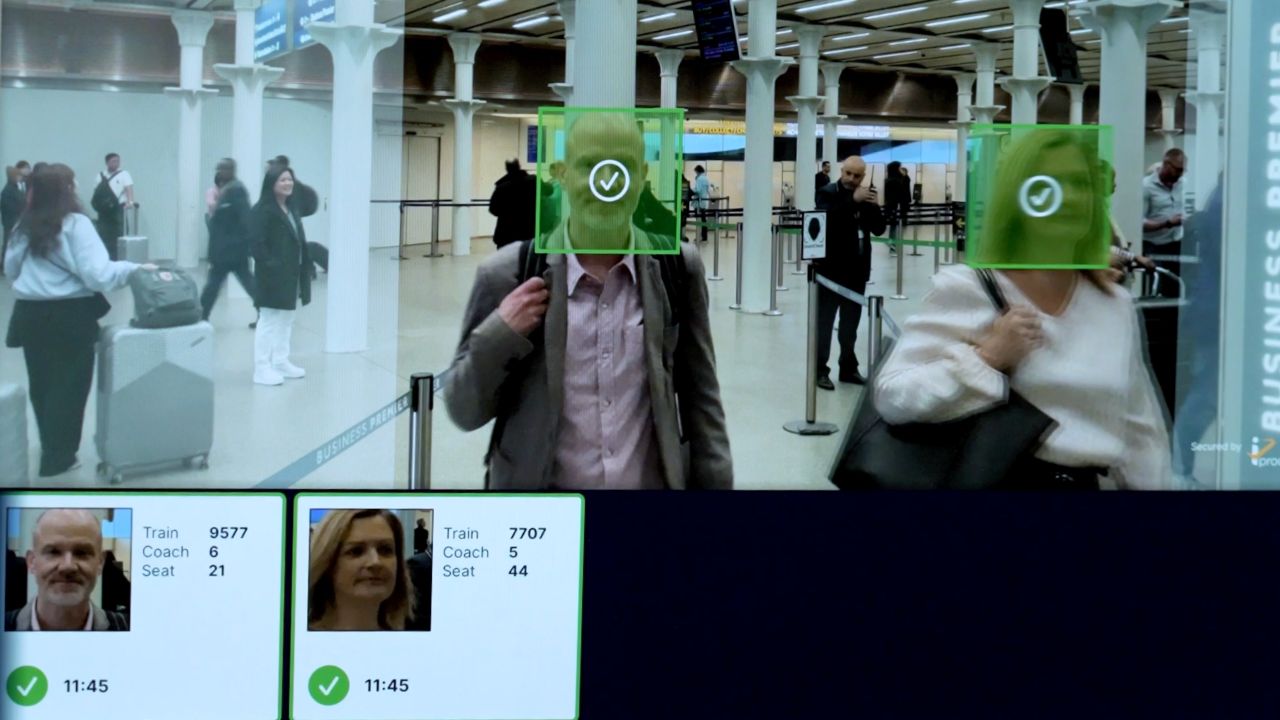
The system lets users skip ticket gates and manual border control in the UK. After baggage inspection and a passport check at the French border, they’re free to board the train.
“It has taught us that a lot of testing and operation at small scale is necessary first,” Bud said. “There are all sorts of practical issues that emerge and need to be sorted before large-scale operation is sensible.”
Reliability is crucial, as recent failures at British e-gates exposed. A technical issue last summer caused chaos at UK borders, four-hour queues at airports, and a “danger to national security,” travel experts warned.
The route to avoid passports
According to Bud, any replacement system will require meticulous design, installation, and operation.
“Real people can do the most unpredictable things — it’s pretty challenging to get right,” he said. “And the security must be very strong, with very dependable liveness detection when people enrol before departure, for example at home on their smartphones.”
Despite the challenges, facial verification is becoming more common at borders. Dubai, for instance, recently launched a biometric system that allows travellers to pass through security without using a passport or ID.
Still, concerns have been raised about the privacy implications. Campaigners fear that biometrics systems used for beneficial purposes can pave the way to more sinister applications. Bud, however, argues that there’s a big difference between the deployments.
“This is not facial recognition for identifying people, in the way the police use it,” he said. “This is facial verification, to which a user has consented, participates in the process and gets personal benefit from. They are very different legally, ethically, and technically.”
Research suggests that most travellers would welcome the tech. According to a 2022 survey by the International Air Transport Association, three-quarters of passengers want to use biometric data instead of passports and boarding passes.