The European Space Agency (ESA) has approved the Laser Interferometer Space Antenna (LISA) mission, the first scientific endeavour to detect and study cosmic ripples from space.
The launch of LISA is planned for 2035, on an Ariane 6 rocket. The project is expected to be the most expensive and complex the agency has ever undertaken.
Cosmic ripples, also known as gravitational waves, are created during some of the most dramatic events in the Universe, such as when black holes collide.
By measuring them, LISA will probe the entire history of the Universe, going back long before stars and galaxies formed. It could even offer a direct glimpse into the very first seconds after the Big Bang.
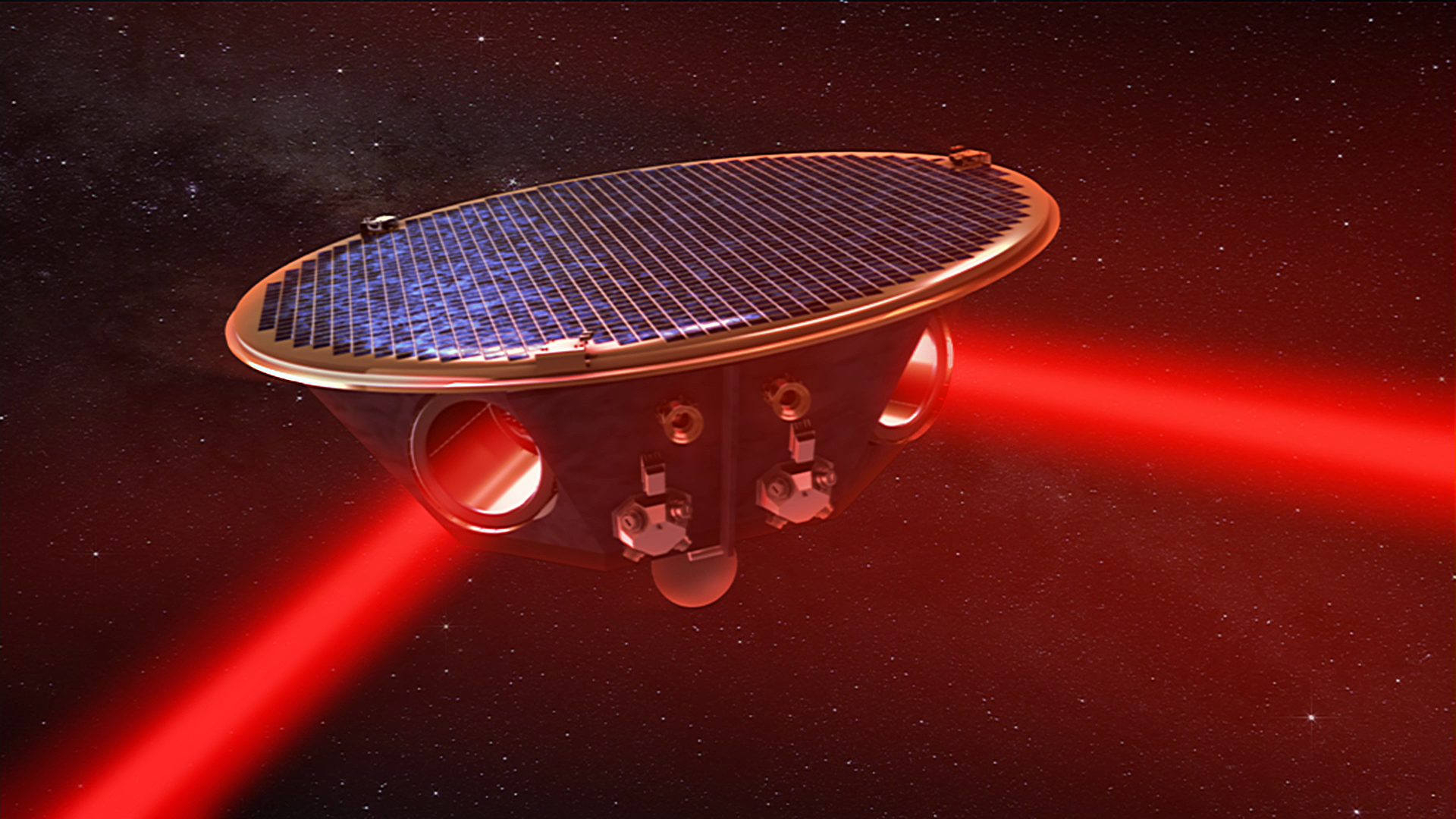
LISA won’t be just one spacecraft but a constellation of three that will travel in a triangular formation. Each spacecraft will be 2.5 million kilometres apart — more than six times the distance between the Earth and the Moon.
The three spacecraft will beam lasers between each other. Movements in this laser triangle will allow scientists to detect and study gravitational waves.
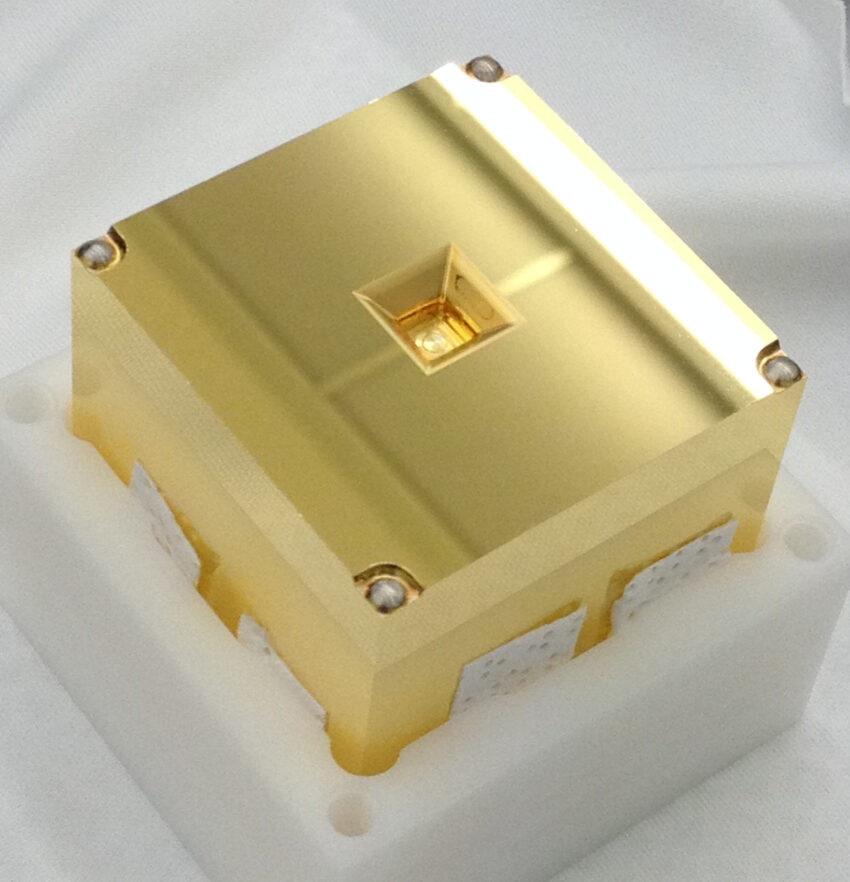
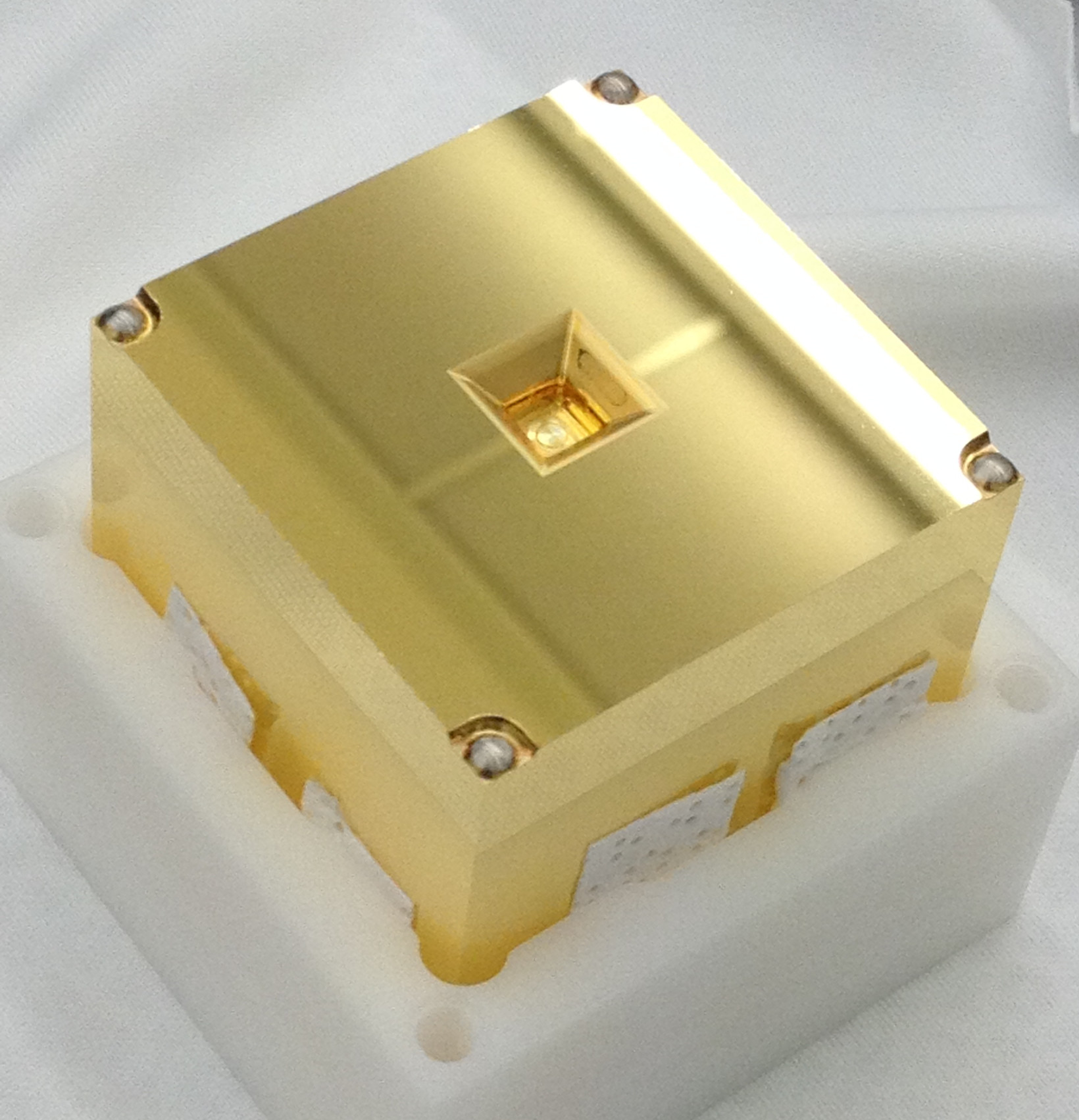
Gravitational waves are ripples in space-time that alter the distances between objects. LISA will detect them by measuring subtle changes in the distances between free-floating “golden cubes” nestled within its three spacecraft.
“LISA is an endeavour that has never been tried before. Using laser beams over distances of several kilometres, ground-based instrumentation can detect gravitational waves coming from events involving star-sized objects — such as supernova explosions or the merging of hyper-dense stars and stellar-mass black holes,” explained LISA lead project scientist Nora Lützgendorf.
Just over a century ago, Einstein made the revolutionary observation that when massive objects accelerate, they shake the fabric of space-time, producing minuscule ripples. These invisible waves travel at the speed of light and squeeze and stretch anything in their path as they pass by.
Gravitational waves were first detected in 2015 by scientists at the LIGO observatory in the US. Being positioned in outer space, LISA is expected to radically deepen these initial findings.
“Thanks to the huge distance travelled by the laser signals on LISA, and the superb stability of its instrumentation, we will probe gravitational waves of lower frequencies than is possible on Earth, uncovering events of a different scale, all the way back to the dawn of time,” said Lützgendorf.
LISA will also look closer to home in our own galaxy, detecting merging pairs of compact objects like white dwarfs or neutron stars. “For centuries we have been studying our cosmos through capturing light,” said LISA project scientist Oliver Jennrich. “Capturing the ripples of space-time with LISA will be a real game-changer, like when sound was added to motion pictures.”
Work to build the instruments and the three spacecraft for the LISA mission will begin in January 2025, once a European industrial contractor has been chosen, the ESA said. The spacecraft trifecta will join ESA’s science fleet of cosmic observers like Euclid, Gaia, and James Webb, in uncovering the origins of the Universe and the laws that govern it.