Walking is the simplest form of exercise, but it has enormous benefits. As our lifestyles become ever more sedentary, doctors are increasingly prescribing walks to address medical conditions and our general wellbeing.
But how can patients stay motivated to keep it up? And how can doctors keep track of their progress? That’s where Lithuanian startup Walk15 comes in.
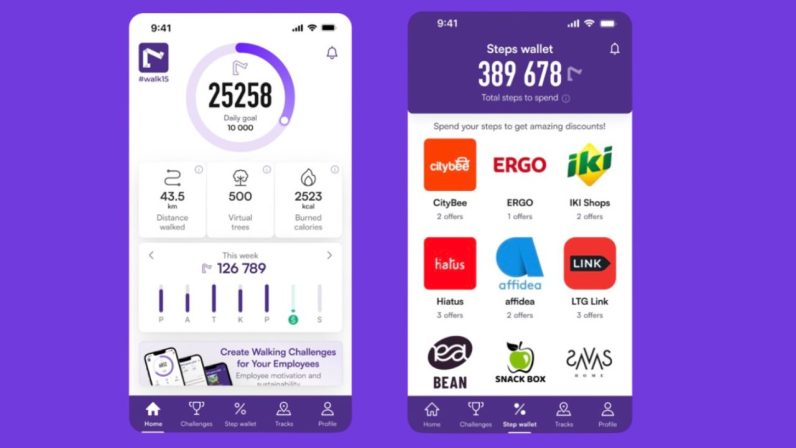
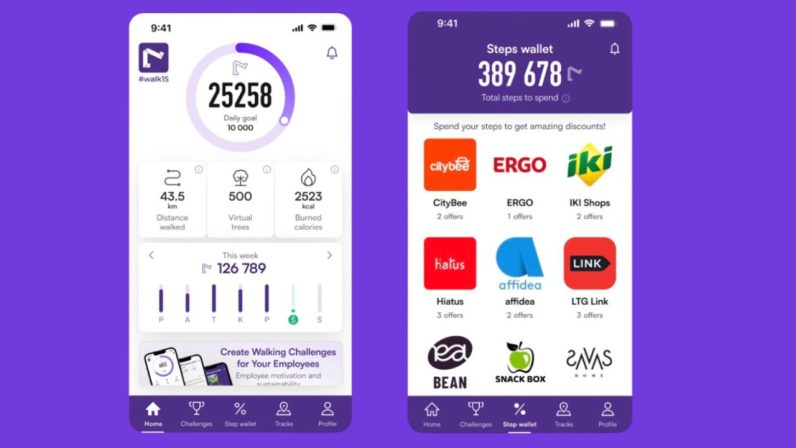
Founded in 2019, Walk15 is on a mission to engage people in physical activity. It provides a platform and an app, which companies and individuals can use to create and participate in step challenges, use their steps to unlock exclusive discounts, and analyse activity data.
The startup has built Lithuania’s largest fitness community, engaging 20% of the country’s population. It counts over 625,000 app users across the globe, while 1,300 companies are using its platform.
Today, Walk15 is taking the biggest step yet in its journey. In a pilot called Personal Prescription Steps, the startup is combining its tech with public healthcare services.
“We’ll be like a pharmacy for walking.
A partnership with the Šeškinės family clinic in Vilnius, the project is designed to help patients increase their physical activity and measure their performance. The initiative will provide personalised doctor recommendations on the number and type of steps they need to take.
“We will be like a pharmacy for walking,” co-founder and CEO Vlada Musvydaitė tells TNW. The partnership, she adds, “can bring real change.” Not only can it expand the benefits of exercise, but it can also support the digital transformation of entire healthcare systems.
The idea of the steps prescription came to Musvydaitė four years ago during a project with a pharmaceutical company. “I had a question then — why do we write prescriptions to get well? Why don’t we write a prescription so we don’t get sick?” she explains.
How does the Personal Steps Prescription work?
The process is very simple. Doctors at the Šeškinės clinic will provide patients with a steps prescription with a specific activity target over a set amount of time — depending on the individual’s health conditions.
Doctors can issue the prescription in the form of a challenge using Walk15’s platform, while patients can access the challenge in the app via a link or QR code.
I got a personalised sample prescription for myself. This is what it looked like:
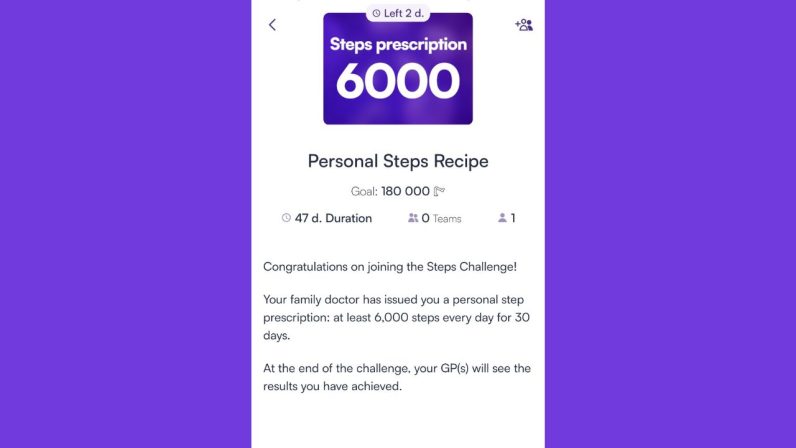
Embarrassingly, I didn’t meet the goal every single day, but on some days I completed as many as 13,000 to 16,000 steps.
I also noticed a significant improvement: I became more aware of how sedentary my lifestyle is. And the closer I was to reaching the goal, the more motivated I felt.
Being someone who’s dealing with a couple of health issues myself, my motivation would have been even higher if I knew that this was a recommendation from my doctor.
A key aspect of this tool is that doctors have access to the patient’s activity. When the prescription expires, they receive an automated report with the users’ progress and can see whether the goal has been achieved. Then doctors can evaluate the results alongside the patients’ overall health assessment and determine whether the prescription needs to be renewed or changed.
Patients also receive notifications on their phone with professional content prepared by doctors of the Šeškinė clinic as well as professors and scientists from the Lithuanian Sports University.
Musvydaitė explains that this can include information about chronic disease prevention, for instance, or about exercises that alleviate anxiety. She stresses that the pilot’s aim is to also educate patients on physical activity and wellness.
Meanwhile, to boost motivation, patients can use the Steps Wallet feature to exchange their steps for benefits such as a body mass index test.
Take a walk, not a pill
“Let’s talk numbers,” Musvydaitė says. “Sufficient daily physical activity fights against more than 40 chronic diseases, and also helps those already suffering from them.”
Medical research shows that exercise can indeed have benefits equivalent to pharmacological treatments. Walking, in particular, can reduce the risk of multiple chronic illnesses, including asthma, type 2 diabetes, and strokes. It is also associated with improved mental health and lower levels of stress and anxiety.
In addition, studies have also found that walking can improve cardiovascular health and decrease the risk of dementia or even some types of cancer more effectively than any pill.
Prevention is key not only to enabling a healthier, longer life, but also to alleviating the pressure on our overburdened healthcare systems.
To put this into perspective, cardiovascular diseases (CVDs) are the leading cause of death globally, according to the World Health Organisation. At the same time, CVD alone is estimated to cost the EU €282bn per year, with health and long-term care accounting for €155bn — 11% of the bloc’s total health expenditure.
Musvydaitė believes that Walk15’s solution is a time- and money-saving technology with benefits for individuals, healthcare services, and governments alike.
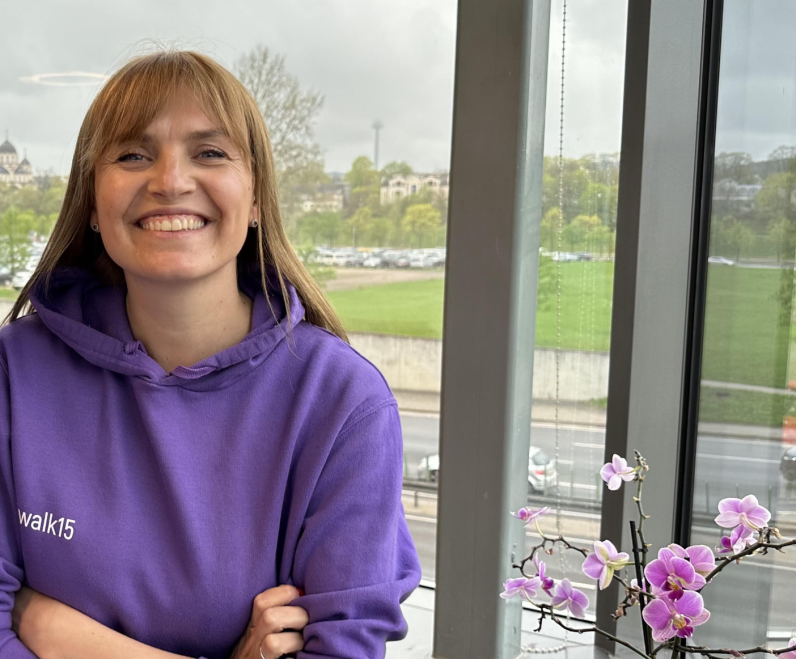
“We will act like the new virtual pharmacy, where medicines are prepared with the help and findings of the best professors [and] doctors,” she says.
“Our pharmacy will produce medicines that will help those who want to lose weight, manage stress, headaches, and ageing processes — the only difference is that the component of our medicines is not chemistry, but sustainable active mobility.”
The first steps prescriptions for Šeškinė clinic’s patients will start on March 15, initially for the prevention of cardiovascular diseases for the 40-60 age group.
If the pilot is successful, it has the potential to not only contribute to disease prevention and a healthier lifestyle, but also normalise walking as a means of medical treatment. “People go to the pharmacy and buy ibuprofen of 1,000mg,” Musvydaitė says. “But what if that was 5,000 steps instead?”