Lithium-ion batteries have transformed everything from consumer electronics to electric vehicles and energy storage. But to power the next wave of tech — from planes to smartphones — they need to get denser.
One option is to replace the graphite anodes within them with silicon ones. Silicon anodes can store 10 times the amount of lithium ions that graphite can and they take up a lot less space. That means more efficient batteries that last longer.
Dutch startup LeydenJar has been touting the benefits for years. The company has bagged a healthy €100mn in funding to date — a vote of investor confidence in its wafer-thin pure silicon anodes. And today, the company announced the site for its first factory, scheduled to open in 2026.
Silicon Valley of the Netherlands
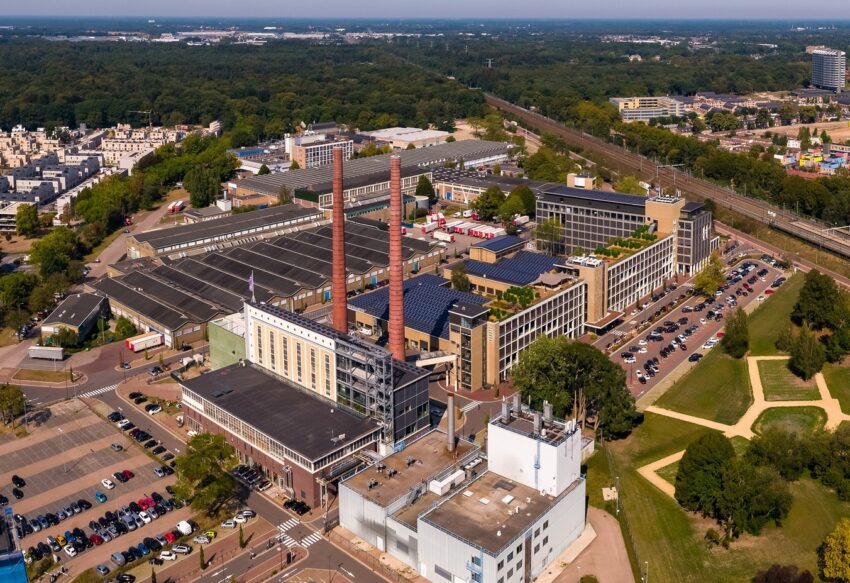
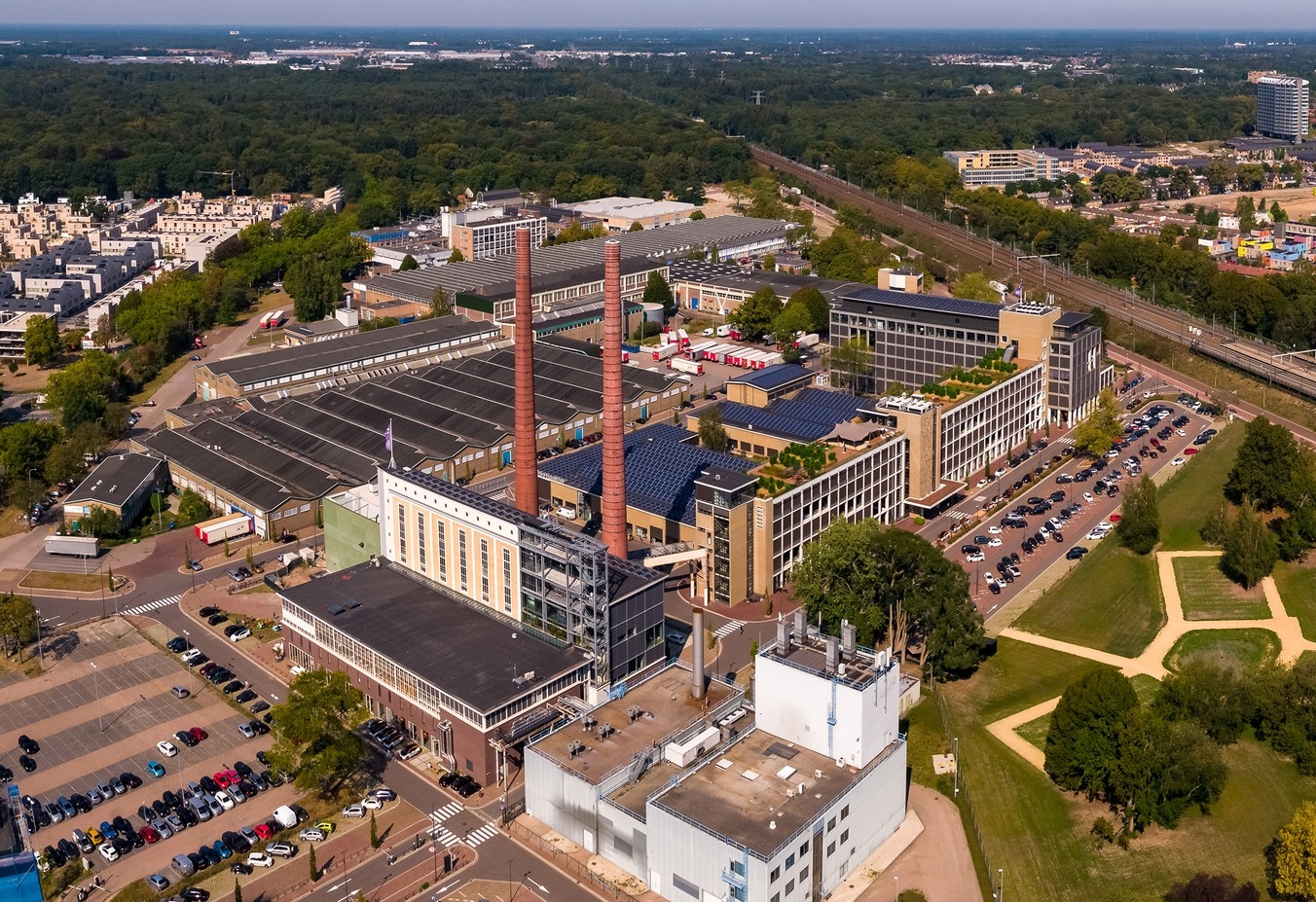
The facility, at Strijp-T in Eindhoven, the Netherlands, is set to produce 70 MWh of the anodes — enough for 4 million smartphone batteries. Other applications include high-density batteries in drones, wearables, and laptops.
Sometimes referred to as the Silicon Valley of the Netherlands, Eindhoven’s “synergy” between universities, research institutes, and industrial companies provides the perfect hotbed to scale up, said LeydenJar’s CEO Chris Rood.
The factory, dubbed PlantOne, will focus on the consumer electronics market at first, with plans to expand into EVs “in the future.” The facility is expected to employee 100 full-time staff once operational.
While the company didn’t disclose any of its customers, its business developer Tim Aanhane told TNW that it is working with some of the 10 biggest consumer electronics companies.
“We ship A-samples for them to evaluate our technology and potential. After this phase ends, we start qualifying our material for introduction in the product lines,” he said.
LeydenJar claims that batteries equipped with its anodes could charge a phone to 80% in less than seven minutes. And the tech could make laptop batteries 40% smaller, allowing for thinner designs. In drones, it could almost double the range.
The company plans to build a second, giga-scale factory, PlantTwo, in 2028.
Secret silicon sauce
Silicon was actually used to make anodes before graphite was. But technical challenges have largely kept silicon anodes to the confines of the lab. The problem is that silicon swells and breaks easily when charged, reducing the lifespan of the batteries it’s used in and even potentially making them unsafe.
LeydenJar has fixed this issue by growing tiny columns of silicon, several micrometers thick, on copper foil. In contrast to a solid sheet of silicon, the spaces in between these columns allow swelling to take place within the material itself, which keeps it from impacting the cell as a whole.
The sponge-like columns are porous and flexible, and lead to a high anode loading area — which means more places for electrons to cling onto. This translates to an energy density up to 1.350 Wh/l or 390 Wh/kg. That’s up to 70% more energy storage than a graphite anode equivalent.
According to LeydenJar, its patented process, a type of plasma vapour deposition, uses 85% less energy than existing methods, potentially making it more environmentally friendly.
What’s more, the ultra-thin anode layers, coupled with the low cost of silicon, could make the anodes cheaper to produce at giga-scale, the startup claims.
The tech could even help cut Europe’s dependence on foreign imports.
EU race for tech sovereignty
From semiconductors to EVs, the European Union is looking to ramp up production of technologies critical to the green transition. But it’s not content to just build more of them; it also wants to use local manufacturers, suppliers, and raw materials wherever possible.
That’s easier said than done. Of all the major technological leaps made in recent years, the majority have come from Asia and the US. If Europe is to keep pace, it must come up with some great tech, fast, or face being left behind.
Tech giants like ASML, also based in Eindhoven, offer a glimmer of hope. The company makes the lithography machines that every single major chipmaker, from Taiwan to Texas, relies upon. Another is UK-based Arm, whose chip architectures can be found in almost every single smartphone in the world.
For LeydenJar, one of the biggest advantages is that unlike graphite, the majority of which comes from China, silicon is abundantly available throughout the world, including in Europe.
While the startup is still small fry compared to the battery giants of China or Japan, Aanhane says the opening of its first plant is an “important step” to bolstering “European battery and material development”.