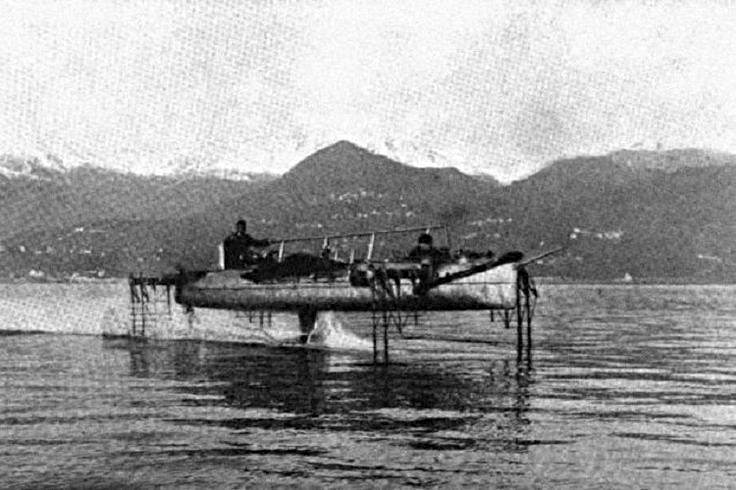
In 1906, inventor Enrico Forlanini launched the first hydrofoil boat on Lake Maggiore in the Italian alps. His contemporary innovator Alexander Bell later said a ride on Forlanini’s invention was “as smooth as flying.”
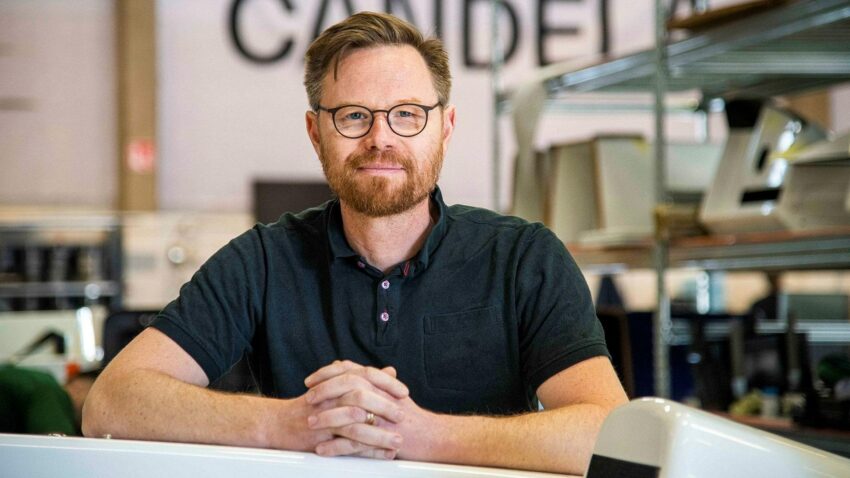
Fast forward a little over a century to 2014, when Gustav Hasselskog quit his corporate job because he was bored. Seeking a new challenge, he came up with the idea for his own flying boat, powered by electricity. People thought he was crazy — he’s gone on to prove them wrong.
Swedish startup Candela has since built hundreds of hydrofoil boats, grown its team to over 220, and opened a factory in Stockholm the size of a football field. Now, it’s looking to branch out from recreational boating into a much bigger market: public transportation.
Candela recently started series production of an electric passenger ferry designed to whizz commuters around coastal cities faster and more sustainably than previously possible.
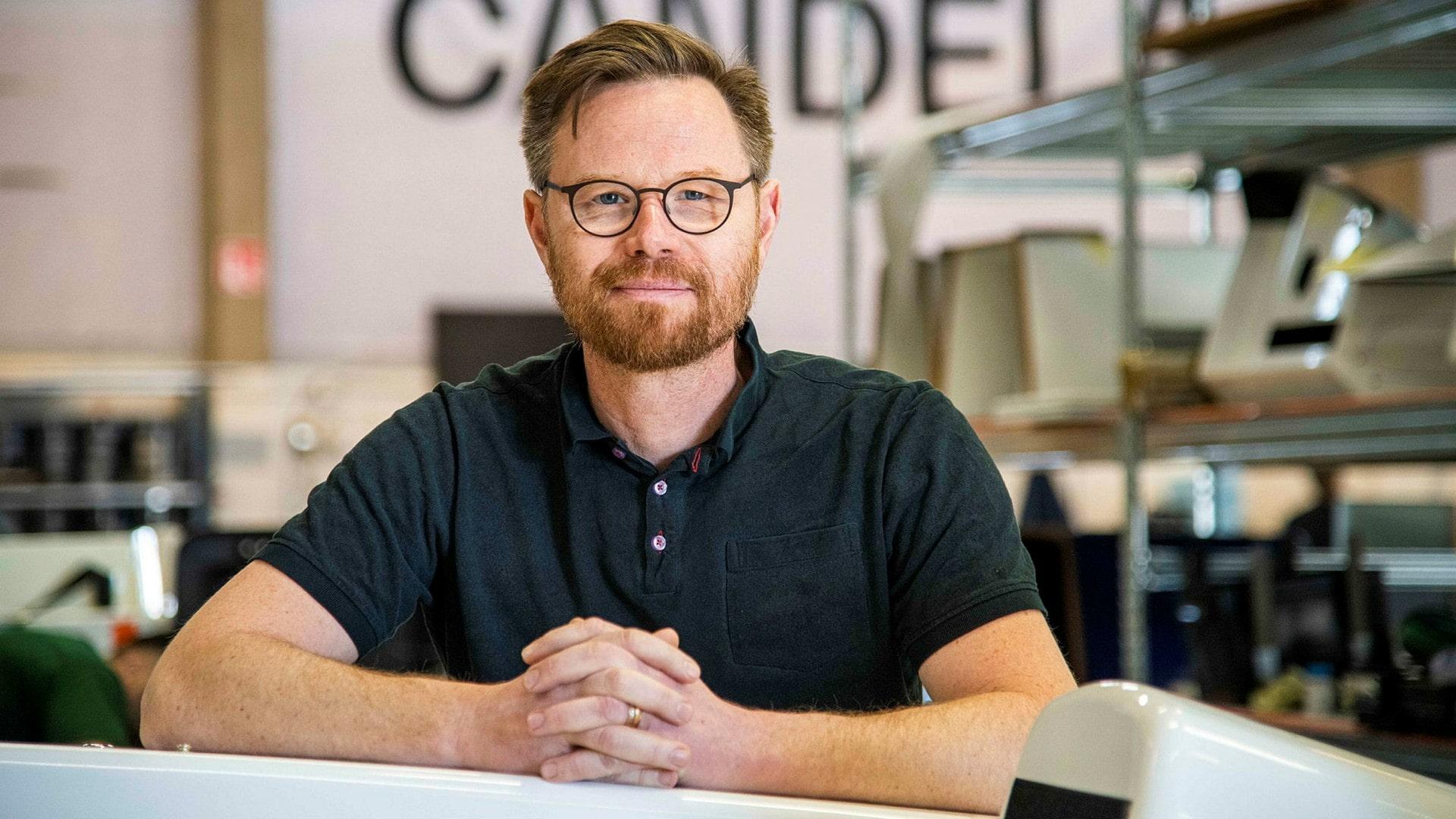
Today, the startup announced its latest, and possibly final funding round, as it hopes to achieve profitability next year.
“It has been a really tough time for startups recently, some great companies have gone under, which makes this raise a real vote of confidence in what we are doing,” Hasselskog tells TNW.
Candela will now be firing on all cylinders (or should I say batteries) in the race to fill orders for the P-12 from cities across the globe.
But how exactly did this startup manage to take such an ambitious idea and bring it to life? We went to Stockholm to find out.
Humble beginnings
The idea for Candela first came to Hasselskog aboard his Bertram 25 Sportfisherman. This iconic American leisure boat from 1967 “was a beauty,” says the founder, who used to ride the craft around the lakes of his summer house (which he later sold to fund Candela).
“I loved that boat, but its V8 engine burnt an insane amount of oil and a huge hole in my wallet,” he tells TNW. A product developer by heart — and blessed with a lot of free time following self-imposed unemployment — Hasselskog began scheming an electric alternative.
The problem was — and continues to be a major hurdle to electric transportation today — that batteries aren’t particularly energy-dense. For the equivalent energy capacity of one litre of petrol, you need around 15 kilograms of batteries.
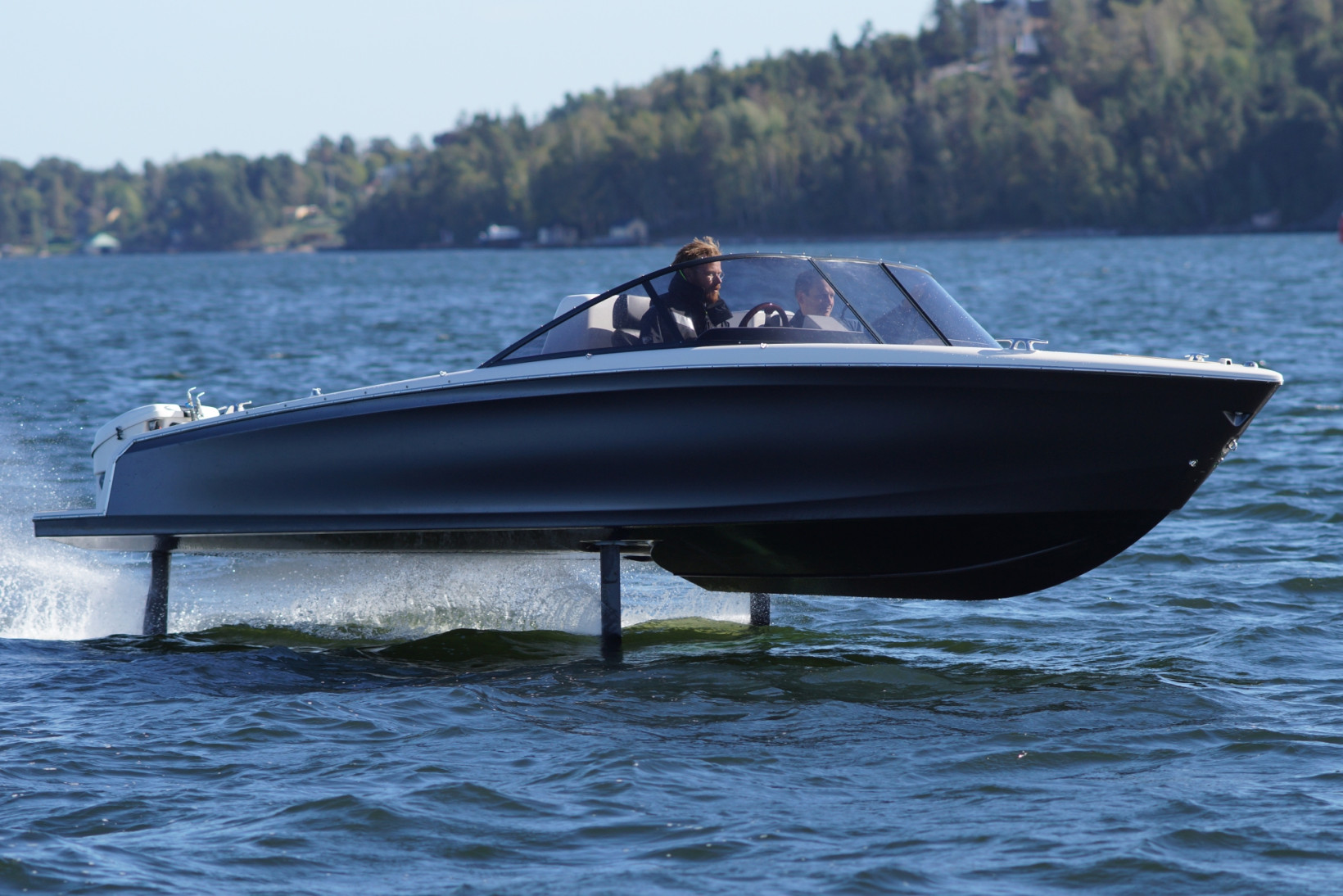
This is where hydrofoils come in. As water flows over the surface of the foil it creates an upwards force, lifting the boat out of the water. This reduces drag and allows the boat to travel faster. It also makes the craft more energy efficient.
While the early pioneers were interested in hydrofoils for speed, it was the promise of efficiency gains that caught Hasselskog’s attention. He calculated that hydrofoils could reduce the energy consumption of a boat by up to 80%. That meant more range using less batteries, cutting costs and carbon emissions.
“That was the ‘aha’ moment when I thought ‘this could actually work’,” he says.
Making the pitch
Like many tech companies, Candela began working out of a garage. “We had to start small, be nimble,” recalls Hasselskog.
“I was over 40 and I’d quit my corporate job to develop a flying boat despite having no experience as an entrepreneur or with boat building — as you can imagine it was a tough sell,” he says jokingly.
In his first attempt to raise money, the founder contacted over 90 VCs. He secured just two meetings. Those two investors eventually erred on the side of caution and said “no thanks.”
Eventually he managed to convince one “crazy” angel investor to take the leap. “I had enormous luck,” he says. “I found someone who is probably more convinced than I am that anything can be done with the right knowledge.”
With the cash he hired three people and started developing the first prototype. Two years later, Candela got its first boat to fly. Two years after that, in 2019, they sold their first craft — the C-7.
That was the watershed moment. “We proved that this could be done,” says Hasselskog.
A year later, the founder received a call from Chris Anderson, head of TED, the producer of the TedTalks series. At the time Hasselskog was an avid follower of Anderson’s podcast, TED Interview. “It was like being a small band and getting a call from Elvis Presley saying: you guys wanna jam?” he says.
Anderson ended up investing €8mn to fuel Candela’s next stage of growth. That included building a bigger, better leisure boat, the C-8. The startup has since built and sold over 200 of the craft, which are 8 metres long and start at €290,000.
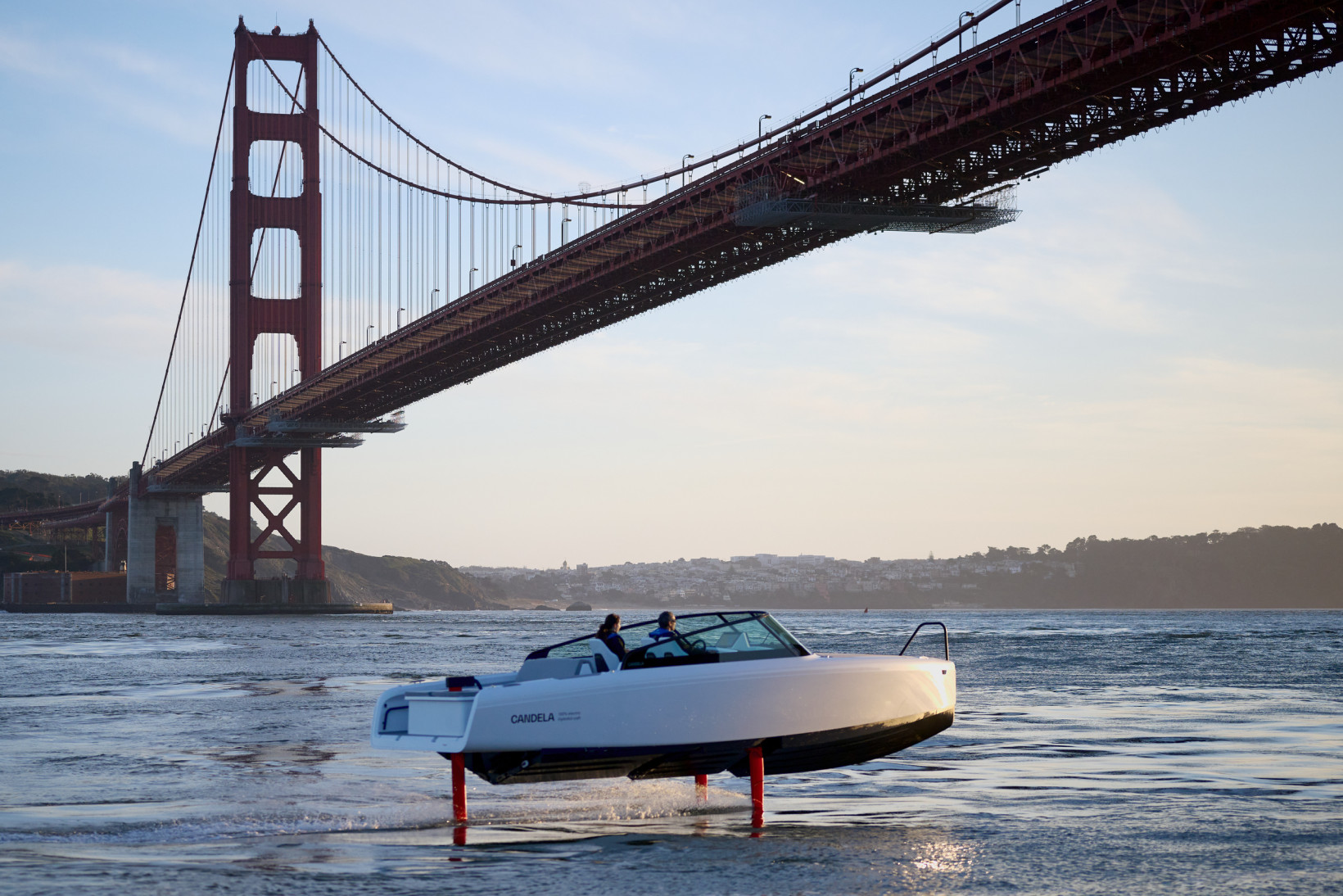
I had the chance to test the C-8 in Stockholm last month and it’s surprisingly easy to drive. You just hit the throttle and at around 16 knots, the hull automatically lifts out of the water.
Once airborne it’s incredibly quiet, there’s almost no wake. Handling is no different from a normal boat. When you want to come to a stop you just slow down and the boat smoothly lands back on the water.
The magic behind the C-8 is its computer-controlled hydrofoils that adjust 100 times-a-second, using data from sensors that gauge wave height and wind speed. This balances the boat even during sharp turns and choppy seas.
While sales were going well for Candela, recreational boating is still a very niche market, especially at that price-point. “To have a real impact, I knew we had to branch out into public transportation,” says Hasselskog.
The P-12 functions in much the same way as the C-8, just on a bigger scale and for a totally new market.
The e-taxi of the sea?
There are currently around 35 diesel ferries slowly chugging their way around Stockholm’s waterways. Each can carry 300 passengers at a time but all of these vessels emit a lot of CO2 into the atmosphere and pollution into the water.
Globally, shipping emits 3% of global carbon dioxide, more than air travel. In the EU, passenger ferries are responsible for 7% of that total — so urgent solutions are needed.
Candela estimates a fleet of 120 of its 30-passenger shuttles could replace the city’s diesel ferries entirely. At $1.7mn (€1.5mn) a piece, that’s a big investment, but Hasselskog is bullish on the returns.
“Unlike a lot of green technologies, the cost is lower, it’s cheaper to run, and cheaper to maintain,” he says.
The first two P-12 shuttles will begin operating this summer on a route between the rapidly expanding suburb of Ekerö and Stockholm.
Ekerö residents currently have to undertake a 55-minute journey by bus, subway, or conventional ferry to reach the city centre. The Candela P-12 Shuttle will cover the 15km route in 25 minutes — saving commuters 50 minutes a day. (Its lack of wake has allowed it to gain an exemption from Stockholm’s 12-knot river speed limit).
By only carrying 30 passengers, the shuttle just needs one personnel on board, as per regulations. A 90% reduction in fuel adds to the cost savings.
All-in-all, Hasselskog estimates that operators will save 50% on operating costs when compared to traditional vessels.
With a top speed of 30 knots (55km/h) and a range of 110 km on a single charge, the little ferries would be whizzing commuters around at over twice the speed currently on offer.
Hasselskog envisions that Candela boats will eventually be used for on-demand service — akin to an Uber for boats. No need for timetables, commuters could instead make as many trips as they like, when they like.
Each ferry would operate non-stop for two and a half hours and then stop for an hour to charge. Because the boat is so energy efficient, its batteries aren’t even that big, only requiring a 200kW charger to power up (the same voltage as a Tesla supercharger).
Full throttle
In addition to city commuting, Candela eyes inter-city and even international travel. Last year, it made the first ever high-speed crossing in an electric vessel between Malmö, Sweden, and Copenhagen, Denmark. The trip took just 30 minutes and cost €3 in electricity, says the company.
In September, the team smashed the world record for the longest distance covered by an electric boat in 24 hours — 778 km — opening up new possibilities for even longer journeys, for instance, from Stockholm to Helsinki.
For cities keen to decarbonise and give their residents quicker, more convenient travel options, the P-12 appears to be low-hanging fruit.
“Now all we’ve got to do is ramp up production — fast,” says Hasselskog.
Candela is currently recruiting 11 new people at its factory every month as it rushes to fill orders. Powered by a fresh batch of funding, its sights are set on its biggest phase of growth yet.
Hasselskog says he feels humbled by how far Candela has come since he got that crazy idea ten years ago. For him, the fight to keep pushing against all odds is now baked into the company’s DNA.
“That spirit, that anything can be done, within the laws of nature, combined with an ability to stay reasonably happy in a constant shit-storm of failures and problems makes the people working at Candela different.”
Something makes me think that the grandfather of hydrofoiling, Enrico Forlanini, would also be proud of what became of his invention all these years later.