
The obscure world of quantum computing is emerging from the lab and into the public domain — fuelled by Big Tech’s recent progress in quantum processors. In the past few months alone, Google launched a chip called Willow, Microsoft unveiled Majorana, and this week, Amazon revealed Ocelot.
While tech giants are making great strides, these companies are still working in dozens of qubits — far from the numbers needed for a practical quantum computer. QuantWare, a startup from the Netherlands, could help them unlock millions more.
QuantWare claims to have created a 3D chip architecture that offers the fastest route to a 1-million qubit quantum computer — and plans to sell it to Silicon Valley.
“We need to get to around a million qubits for a quantum computer capable of economically-relevant, world-changing calculations,” said QuantWare’s co-founder and CEO Matthijs Rijlaarsdam. These would be large, megawatt-scale systems, comparable to today’s AI clusters, he said.
Qubits, like bits in a regular PC, are the basic units of information in a quantum computer. The more you have, the faster the machine.
“Even Google took five years to double the number of qubits on its chips — from 50 to 100,” said Rijlaarsdam. “If this is the pace of scaling up, we’re not going to get there fast enough.”
Solving the quantum qubit conundrum
One of the biggest bottlenecks to scaling quantum computers is making room for more qubits.
Current designs route the electronic signals used to control the qubits to the edge of the chip. But as qubit numbers grow, space runs out.
Then you’ve got components like amplifiers, filters, and mixers that ensure signals are delivered with the right frequency, amplitude, and noise levels to perform accurate quantum calculations. In today’s quantum computers, each component is housed on a separate chip in a separate metal box — resulting in quantum computers growing too large too quickly.
QuantWare’s core offering — vertical integration and optimisation, or VIO — promises to solve quantum’s scaling problem.
The 3D chip architecture replaces edge-based wiring, allowing signals to travel “from above,” producing higher qubit densities. VIO also integrates bulky components like amplifiers and filters onto a single quantum processor or ‘chip’. In effect, it creates the quantum computing version of an integrated circuit in modern PCs.
“We provide the fastest path towards scaling towards a million qubit system,” said Rijlaarsdam. And because VIO enables all those qubits to be integrated into one chip, it will be “exponentially faster” than a system made up of several chips connected together, he said.
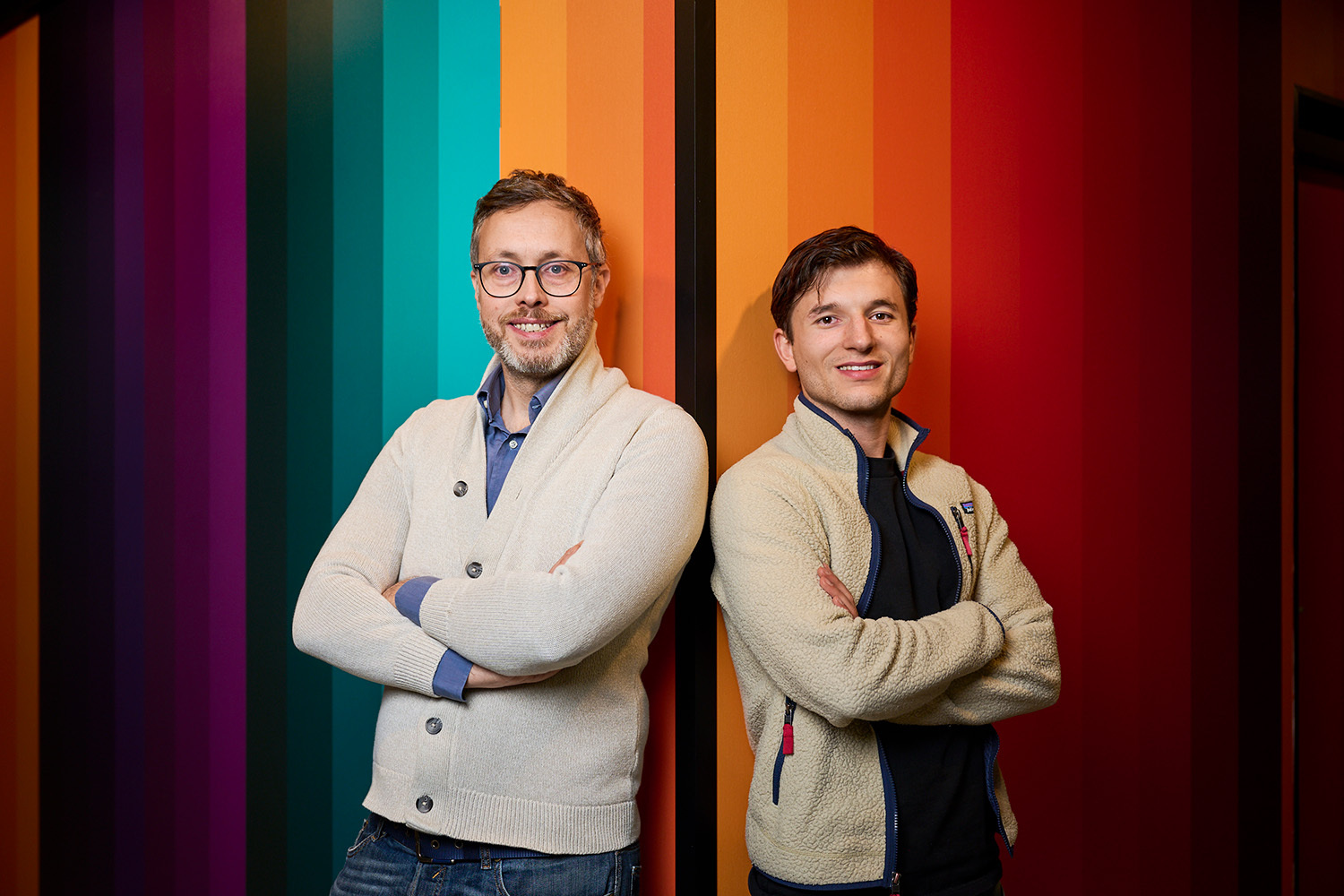
Rijlaarsdam and Alessandro Bruno founded QuantWare in 2020 as a spinoff from TU Delft. The startup makes its own quantum chips and amplifiers, which are already found in quantum computers in 20 countries. It will use VIO to rapidly scale its processors. But it will also offer the technology to companies building their own quantum machines.
Big Tech, big customers
As tech giants compete in the race to a viable quantum computer, QuantWare is positioning itself to cash in. The startup aims to become the quantum equivalent of what TSMC is to Apple or Microsoft in classical computing — an enabler, not a competitor.
“Each Big Tech breakthrough reinforces QuantWare’s value proposition,” said Rijlaarsdam.
Quantum computing has transformed in recent years from a speculative moonshot into a technology poised to turbo-charge everything from drug discovery to cryptography. Last year, quantum technologies attracted over $49bn in public and private investment.
“Quantum computing is less now a science problem than an engineering problem, and it will quickly become an economic problem: how can we scale as quickly as possible?” said Rijlaarsdam.
Today, QuantWare raised €20mn in Series A funding to further develop VIO and build out its chip fabrication facilities. The round was co-led by Invest-NL Deep Tech Fund and Innovation Quarter. Job van der Voort, founder and CEO of Remote, also came on board as an angel investor.
If QuantWare’s bet on 3D chip architecture pays off, it could offer a route to the million-qubit milestone needed to get quantum computers that truly change the world. The race is on.
The next big thing in tech is one of three key themes at TNW Conference, which takes place on June 19-20 in Amsterdam. Tickets for the event are now on sale. To get 30% off, use the code TNWXMEDIA2025 at the check-out.