
Massive amounts of public money are being mobilized to kickstart economies out of COVID-induced recessions. Many countries are allocating parts of their stimulus packages towards ensuring the recovery is green.
As we emerge from the COVID shock and try to accelerate progress on decarbonization, should we prioritize larger or smaller-scale solutions?
- A million 1 kilowatt solar panels or a single 1 gigawatt nuclear reactor?
- 250 electric bikes or a single tram on a light transit system?
- £150 smart thermostats or £50,000 whole-home energy-efficient retrofits?
There are many low-carbon ways to supply energy, provide mobility in cities and heat homes. These solutions vary on what we have called the granular-lumpy continuum.
More granular options are relatively small in size, low in cost, and modular – they scale through replication. More lumpy options are relatively large, costly and non-divisible – they scale by growing larger.
For a study published in Science earlier this year, we collected data on a wide variety of energy technologies along the granular-lumpy continuum and then tested how well they performed against nine characteristics of accelerated low-carbon transformation.
We found that more granular technologies have nine important advantages over more lumpy alternatives. These advantages set clear priorities for policymakers deciding how to allocate limited resources.
Faster and cheaper energy supply
The first three are all essential ingredients of a rapid technological transformation of how we supply and use energy in buildings, transport and industry. With the UK and the world falling well behind on progress towards net-zero emissions, speed is of the essence.
First, we found more granular technologies deploy faster, with lower cost barriers and less specialized capital requirements. Whereas it takes decades and billions to get a nuclear power station up and running, the energy equivalent in distributed solar power can be deployed in years for a fraction of the cost.
Second, we found more granular technologies are less risky for investors, with lower cost overruns and construction delays.
Third, we found more granular technologies improve faster in cost and performance, as they provide more opportunities for experimentation and learning. Learning rates, which measure the percentage cost reduction for each doubling of cumulative experience, are twice as high for smaller-scale technologies.
Big projects create inertia
The second set of advantages of granularity all help contribute to escaping inertia or “lock-in” in our current energy system with its long-lived, slow-to-change and ever-expanding infrastructure.
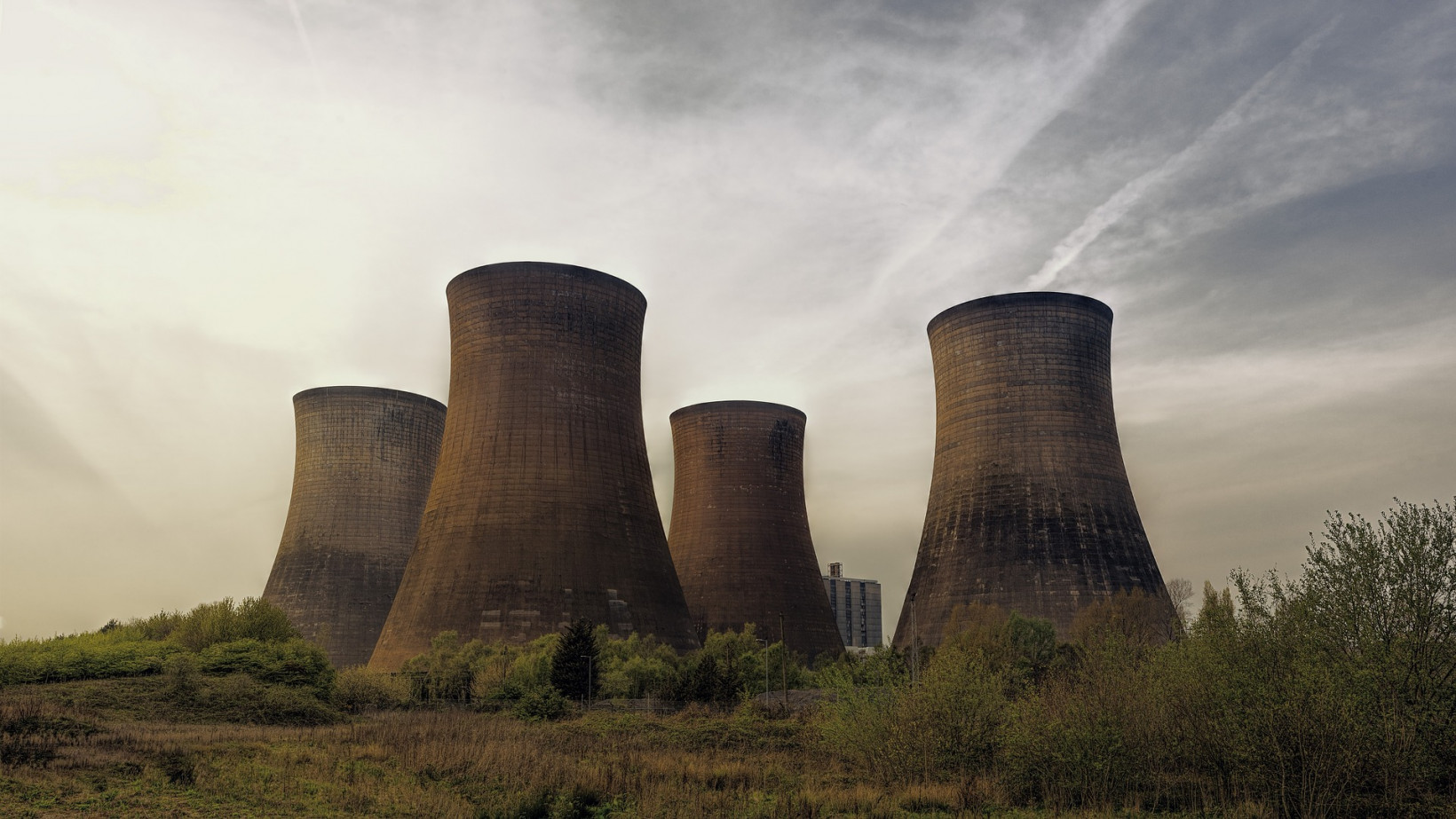
Fourth, we found more granular technologies have shorter lifetimes, enabling quicker turnover of existing capital stock. In contrast, power stations, jet aircraft and skyscrapers once built will last decades or centuries creating inertia to change.
Fifth, we found more granular technologies offer more opportunities for efficiency improvements that downsize the magnitude of the decarbonization challenge.
Sixth, we found more granular technologies are less complex, enabling more rapid innovation cycles. This means product and process improvements move faster from lab to market.
Widely shared benefits
The final three advantages all recognize that climate action and climate justice go hand in hand. Rapid decarbonization is not possible without the social and political legitimacy that comes from widely shared benefits and jobs.
Seventh, we found more granular technologies are more equitably distributed among the world’s population. You’re eight times more likely to have access to a mobile phone than to a car.
Eighth, we found more granular technologies provide higher social returns on every public dollar invested in innovation. More economic productivity, more air pollution benefits, more energy security.
And ninth, but not least, we found more granular technologies mean more jobs. Per unit of power generated, a solar plant creates ten times the net employment of a fossil fuel or nuclear power facility.
In our study, we are careful to point out that these nine advantages of granularity do not fall like manna from heaven. They are the result of concerted research, innovation, investment, standardization, mass manufacturing and policy advocacy.
It can also be challenging to integrate lots of granular technologies into existing infrastructure: heat pumps and solar panels need to connect into electricity networks, electric vehicles into charging stations, insulation products into building envelopes.
Nor can granularity outcompete lumpiness in all contexts. There are no like-for-like alternatives to some lumpy technologies. Think jet aircraft flying long-haul or iron, steel, and cement manufacturing.
In other cases, more granular options are available but offer a different type of service. Bicycles and SUVs can both get us around cities but with different implications for speed, comfort, health, convenience, status and more besides.
So while not a black-and-white picture, we still found compelling evidence that more granular energy technologies tend to deploy faster, improve quicker, offer more ways to escape carbon lock-in, are more equitably accessible and create more jobs.
This article by Charlie Wilson, Reader, School of Environmental Science, University of East Anglia; Caroline Zimm, Research Scholar, Transition to New Technologies, International Institute for Applied Systems Analysis (IIASA), and Simon De Stercke, Research Associate, Engineering, Imperial College London, is republished from The Conversation under a Creative Commons license. Read the original article.