Parking prices, congestion charges, fuel stations – the costs and diversions one never had to face on their way to work in the age of horse and carriage. The switch from horse-riding to automobiles changed the kind of materials used to build roads – slippery asphalt replaced cobbled streets and dirt roads.
Autonomous driving and other new transportation modes are key technological megatrends in the infrastructure industry. This calls for the built environment to adjust to these latest mobility technologies as they shape the future of roads and real estate construction.
In the public sphere, assimilation to these new technologies in mobility has already begun in the regulatory space. Nations across Asia, Europe and North America for example have already issued autonomous testing permits and offered regulation for self-driving cars on public roads.
Emerging mobility is also at the nexus of the proliferation of smart cities. The growth of smart cities is already calling for changes and adaptations by the construction industry. Similarly, the construction industry needs to be agile in the business models it uses as it adapts to trends such as automated, connected and electrified mobility.
Vehicle automation is already being recognized for use on construction sites, indicating the use of these technologies will dominate how the construction industry works in the future. For example, the advent of electric cars created the necessity for charging stations overnight and, only now, has been incorporated into planning, permission and housing development initiatives.
Changes in the built environment are also due to come from changes in behaviors around car proprietorship. Urbanites perceive cars more as a service to use and less as a good to own. The popularity of rideshare, car hailing services and apps such as Uber are a testament to this. In a world where private car ownership is reduced, so is the need for parking, and traditional parking structures become dinosaurs that need to be torn down or repurposed.
Significant changes in the mobility industry have come in the form of investment, with billions spent on autonomous vehicle (AV) technologies by automobile manufacturers across the world including Mercedes-Benz ($3.04bn), Volkswagen ($54.2bn) Toyota ($4.32bn), Ford ($5.39bn), and GM ($1.5bn).
“Playful” investments such as Toyota’s prototype smart city at the bottom of Mount Fuji, Woven City, also show how these actors are beginning to recognize the importance of the built environment in accommodating their mobility technologies.
Other industries have also taken interest in the mobility space, such as Google’s Waymo self-driving technology. These shifts alongside the prospects of improved driving safety and efficiency in mobility make it clear that the advent of technologies such as autonomous vehicles is not far, even if profound technological (and legal) hurdles still remain, and timelines for Level 5 autonomy have admittedly slipped.
This begs the question, how ready is the built environment for some of these changes?
What the construction industry needs to be aware of
It would be sensible for the construction industry to embrace these changes with some modicum of preparedness. The growing call for employee safety, filling the skills gap, sustainability and more in construction, mean that the sector needs to embrace innovations such as those coming from AVs and emerging mobility. Ignoring such market changes will be at unprepared firms’ peril.
To remain efficient, business operations will require short-, medium- and long-term preparations for the AV construction space. Influences range from supply chain impacts, to sustainability in construction.
Space reallocation will come in varied forms such as the reduction of dealerships and parking garages, both public and residential alike. The unlocking of urban land from space reallocation will affect the dynamics of the housing market, such as the increased availability of urban housing. This will also affect the distribution of real estate prices whether looking at land prices or rents, and rearrange urban densities (for example suburban properties become more attractive when the time cost of commuting is cut down due to the use of AV vehicles).
Transportation can operate 24/7 in a fully AV world, allowing more to be done in less time in logistics and supply chains. This impact on the transportation of building products could reduce construction costs in logistics, and improve management of timelines.
There will also be shifts in the kinds of demand for construction work, such as which areas of infrastructure will require upgrades, and which would require outright replacements.
In a fully electrified transportation future, traditionally recognised sources of road infrastructure funding such as fuel taxes will falter. Government funding investment in construction and other sectors will be affected by these changes in funding models.
Some of these changes will be opportunities, such as the unlocking of urban land for new construction as petrol stations and dealerships become things of the past in a new mobility future. Other changes will be hurdles to cross such as the pressure on highways and transport infrastructure to keep up with the rapidly changing technologies; a call to future proofing construction.
The point is that market patterns in construction will shift due to emerging mobility.
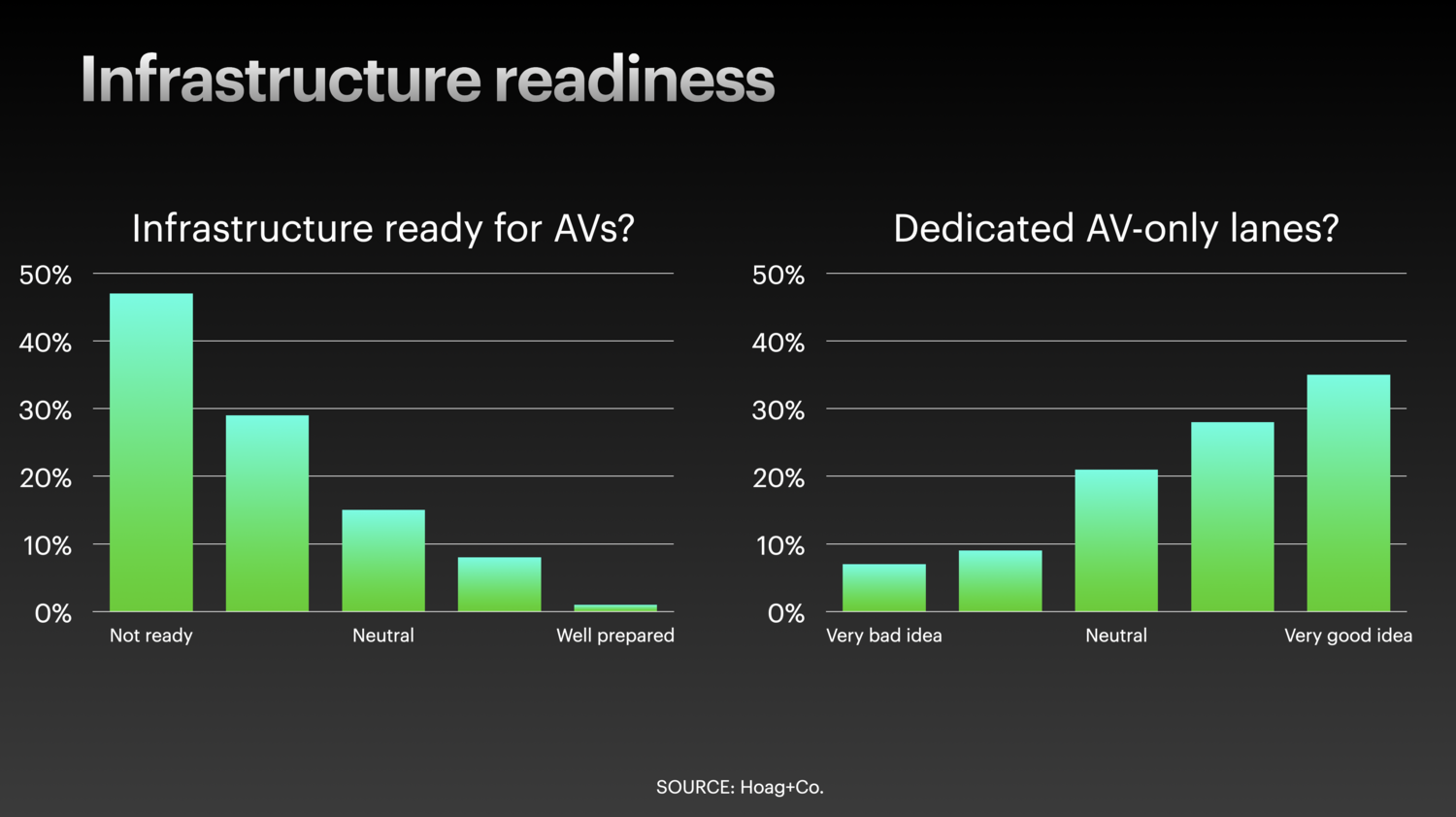
A recent consumer market research study by H+C., an international autonomous vehicles and urban mobility consulting firm, shows that consumers think dedicated AV-only lanes are a good idea, implying that the population is ready for the mobility revolution that is already under way.
This article was written by Chima Rickards, a PhD candidate, Associate, Hoag+Co, on The Urban Mobility Daily, the content site of the Urban Mobility Company, a Paris-based company which is moving the business of mobility forward through physical and virtual events and services. Join their community of 10K+ global mobility professionals by signing up for the Urban Mobility Weekly newsletter. Read the original article here and follow them on Linkedin and Twitter.

SHIFT is brought to you by Polestar. It’s time to accelerate the shift to sustainable mobility. That is why Polestar combines electric driving with cutting-edge design and thrilling performance. Find out how.
Published October 12, 2020 — 09:25 UTC