I remember Viber as an app my college friends and colleagues would use to call their relatives in other countries in the early 2010s. Since then, Viber has changed and evolved into a messaging app too.
After WhatsApp released its new controversial privacy policy last month, there has been a lot of talk about finding alternatives to the Facebook-owned app. Most of these conversations have revolved around Telegram and Signal. However, Viber has built a strong case for itself by establishing itself in non-western markets.
I talked to the company’s CEO, Djamel Agaoua, about the app’s business model, operations, and how it plans to target a different audience than Telegram and Signal. But before we jump into that, let’s take a quick look at the app’s history.
History
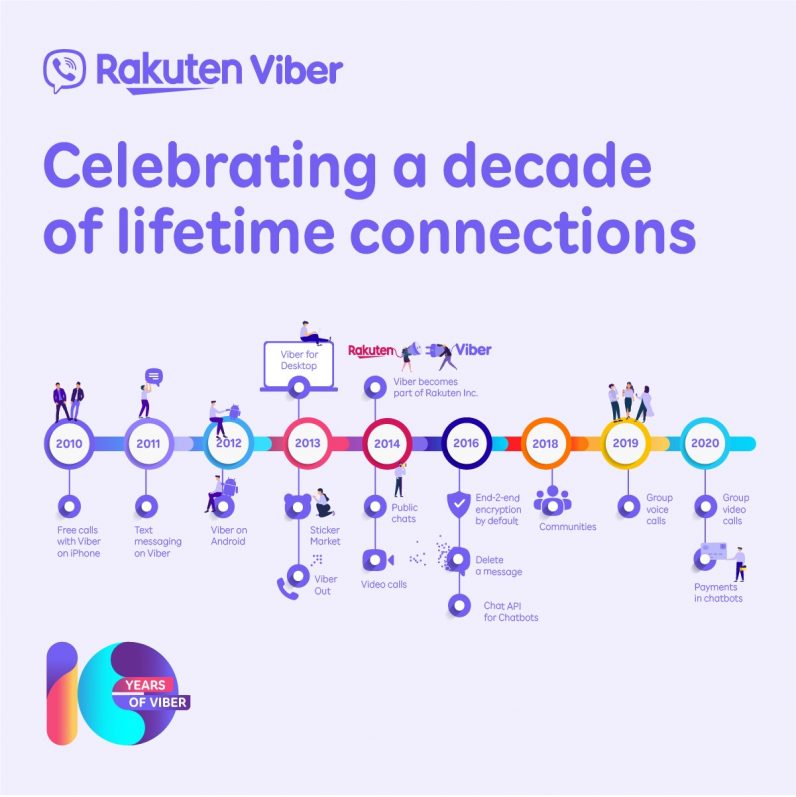
Viber was founded in 2010 by Talmon Marco and Igor Magazinnik, who worked together in the Israel defence force. Initially, the app just focused on person-to-person calling to compete with the likes of Skype.
In 2012, the company began to develop the app as a messaging product with features such as stickers. In 2014, Japanese telecom giant Rakuten acquired Viber for $900 million.
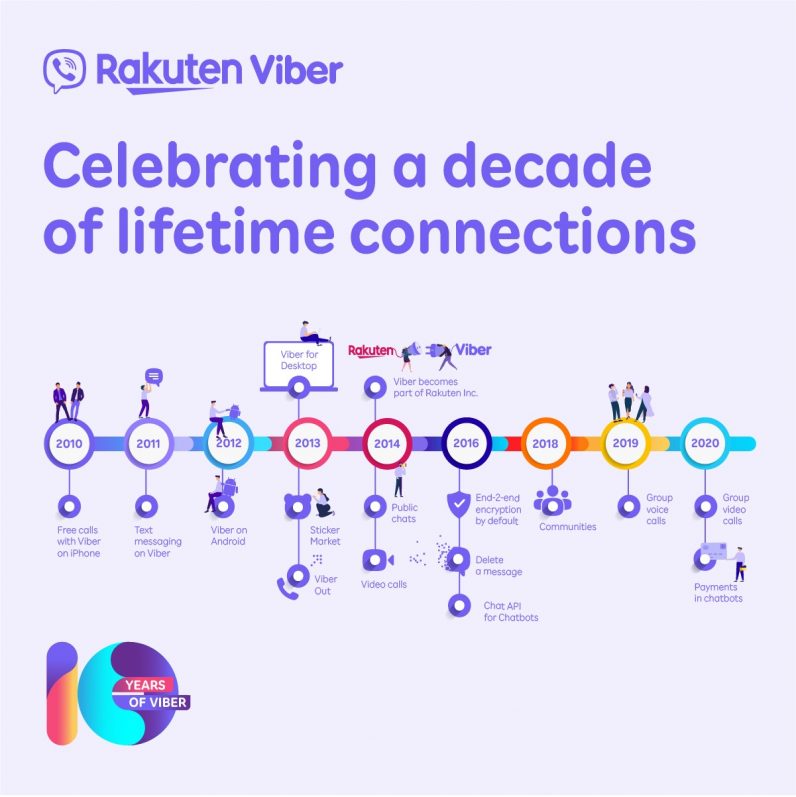
A year later, the messenger began introducing end-to-end encryption for one-to-one chats. It uses some concepts of Open Whisper protocol used in Signal, but the app claims that its source code for encryption is different.
How does Viber make money?
Chat apps such as WhatsApp and Telegram have gained popularity, but they haven’t made a lot of money. WhatsApp’s new policy aims to change that, and Telegram wants to experiment with ads after a failed ICO.
In contrast, Viber broke even in Q4 2019 and registered a full year of profitability in 2020.
It has a host of services to offer in one app. You can think of it as a mash-up of WhatsApp and Telegram. It has private chat that’s end-to-end encrypted, and it has public groups without encryption.
The app also lets you call any phone number — even the ones that don’t use Viber — with a subscription plan. Agoura said that its most popular plan costs $7 and lets you call people in 50 countries covering 75% population of the world. He added that this covers 40% of the app’s revenue.
The next 40% of the company’s money comes from Viber for Business. The firm started this service four years ago and lets local stores and services chat with customers through its platform. Currently, it’s available in Russia, Ukraine, Hungary, Greece, and Bulgaria, but Viber plans to expand it to more countries.
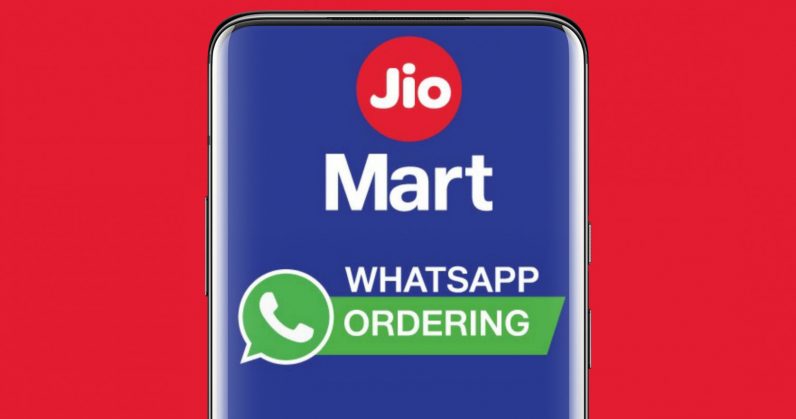
This is similar to what Facebook is trying to do with WhatsApp Business. According to the Wall Street Journal, the app already has more than 50 million monthly active users, with some notable partnerships such as Reliance Jio Mart for grocery delivery in India.
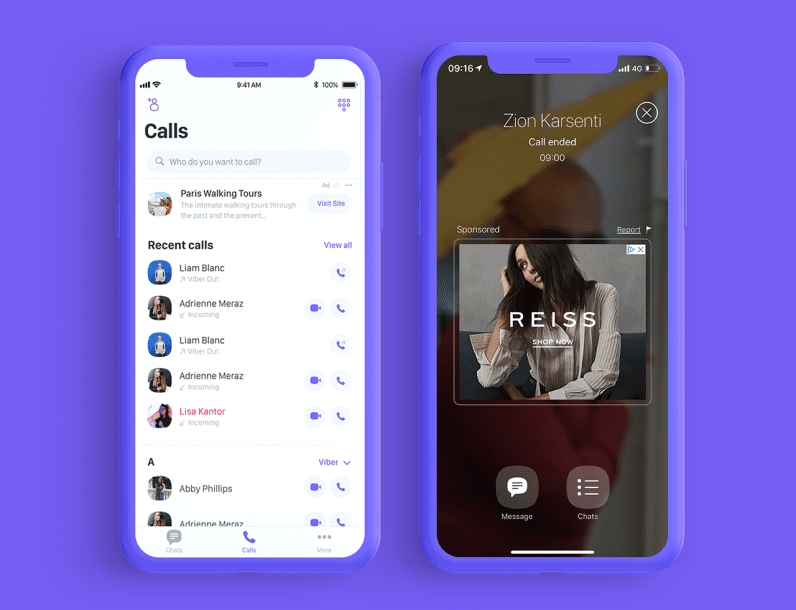
The last 20% of Viber’s revenue comes from ads placed in its app. The company claims that it uses only your IP based-location, age, and gender to show ads. And you have an option to ask the app to not use your age or gender for targeted ads.
If you go by numbers, Viber is probably one of the top five messengers in the world by user-base. Agoura said it has 240-250 million monthly active users and 170 to 180 million daily active users.
Viber has largely made its mark in non-western countries. In Ukraine, Belarus, Greece, Bulgaria, Montenegro, Serbia, the company claims to have more than 90% of the market share in messaging apps; in places such as Russia, Iraq, and Myanmar it has 40-50% penetration. The firm said that expats from these countries also use Viber to connect with their families back home.
Criticism of Telegram, WhatsApp, and Signal
Viber has tried to distance itself from Facebook as much as possible. Last year, it pulled all its ads from Facebook and Instagram. It also removed its integration with GIF searching platform GIPHY, which was bought by Facebook last year.
The company believes it has a better feature set than WhatsApp, and it can serve its users well without collecting a ton of data.
Agoura has a lot more respect for Signal, but he worries about its sustainability:
Signal is a good product which is made well. We respect its technology. It has a straight-to-the-point app with all the basic features. However, the key question about this company is sustainability.
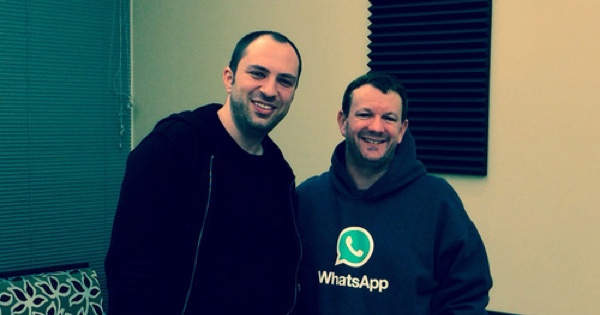
Currently, the app is managed by a non-profit foundation and is supported by donations, including $50 million by WhatsApp’s co-founder, Brian Acton. A story written by Platformer’s Casey Newton last month noted that several former and current employees of Signal are worried about moderation, misinformation, and sustainability as the app is gaining a lot of users.
However, there’s no love lost between the Viber CEO and Telegram. He says that the app is not an alternative to WhatsApp when it comes to privacy:
You can search for stuff like cocaine and heroin on Telegram, and none of that is moderated or banned. White supremacists also use Telegram to organize revolutions. I would let my kids use WhatsApp, but not Telegram.
It’s important to note that Viber has a similar function in terms of public groups. Admins will have to specifically invite you to these chats to join.
However, you can’t search for groups. Plus, the company claims that it uses AI to ban content related to drugs, porn, weapons, or hate speech. However, AI’s track record for moderation is not perfect and it could be fooled by slight modification towords.
Agoura admits that Viber’s AI is not perfect, but he says the firm is spending millions of dollars every year to improve that technology.
What’s the road ahead?
Viber is realistic about its growth goals. It says that while it has seen an increase in downloads in various parts of the world, it would have to wait for a couple of months to see if these users are here to stay.
Rather than branching out in new countries, the company wants to introduce new services in the places it’s already dominating. For instance, introducing payment services in Nepal, Hungary, and Ukraine. The company is planning to launch cross-border payments too, so people living in other countries can send money back home.
Compared to WhatsApp, Telegram, and Signal, Agoura says Viber is more secure, the company is more sustainable, and offers all services other messengers can. It might not be in direct competition with these companies in a lot of markets, but it’s happy with going on its own path.
Did you know we have a newsletter all about consumer tech? It’s called Plugged In – and you can subscribe to it right here.
Published February 4, 2021 — 09:18 UTC