In September 2020, astronomers announced the possible detection of phosphine on Venus. On our own world, phosphine is mostly produced by life, and the detection of this gas in the atmosphere of Venus could have been an intriguing hint of alien lifeforms.
However, a new study from the University of Washington shows the chemical markers thought to be caused by phosphine may have been the result of ordinary sulfur dioxide. This gas, released into the atmosphere by volcanic activity, is commonly associated with the smell of burnt matches.
“Instead of phosphine in the clouds of Venus, the data are consistent with an alternative hypothesis: They were detecting sulfur dioxide. Sulfur dioxide is the third-most-common chemical compound in Venus’ atmosphere, and it is not considered a sign of life,” explains Victoria Meadows, a professor of astronomy at the University of Washington.
Love should be hot — sulfuric acid rain is optional
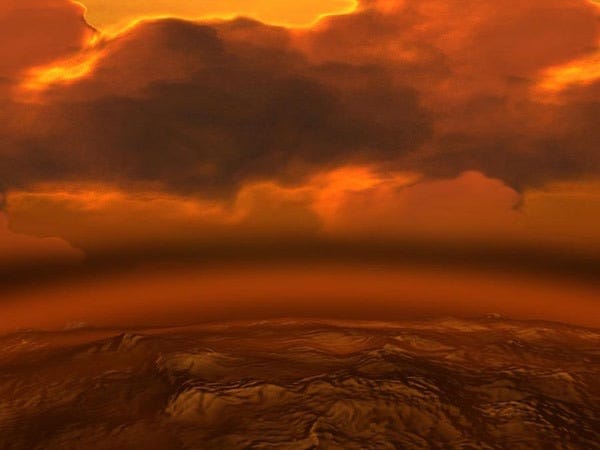
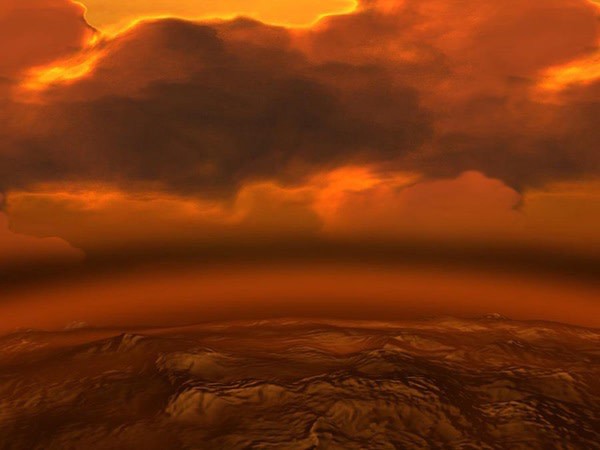
Venus is often referred to as a hellscape planet. This world, named after the Goddess of Love, is home to temperatures hot enough to melt lead, crushing atmospheric pressures, and sulfuric acid rain. These conditions make the surface of Venus an unlikely place to find life. However, conditions higher in the atmosphere of Venus are more temperate.
The UW team networked with researchers from NASA, the Georgia Institute of Technology, and The University of California Riverside, examining claims of phosphine (a potential by-product of life) in the atmosphere of Venus.
They found that sulfur dioxide explains radio observations of Venus better than phosphine. And, concentrations of SO2 are more likely than phosphine to be found in the Venusian atmosphere. Researchers on this new study also showed that radio signals seen in the earlier study were recorded in the mesosphere of the Venusian atmosphere, higher than originally believed. At this altitude, phosphine would quickly be destroyed by radiation from the Sun.
“We find that the 266.94 GHz line does not originate in the clouds, but above 80 km in the Venus mesosphere. This level of line formation is inconsistent with chemical modeling that assumes generation of [phosphine] in the Venus clouds,” researchers describe in an article published in the Astrophysical Journal.
It’s all about the frequencies of light you DON’T see
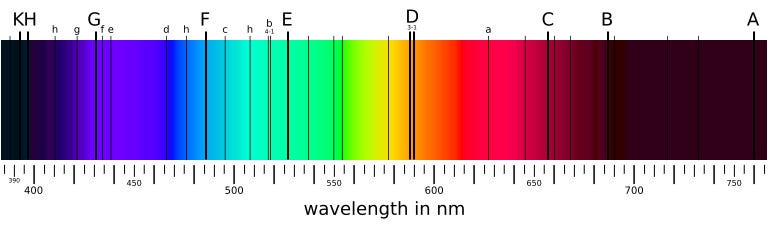
Every type of chemical compound absorbs electromagnetic radiation at specific wavelengths. By examining light passing through a planetary atmosphere, astronomers are able to use these absorption lines to determine the presence and concentrations of gasses found there.
Earlier data, recorded by the James Clerk Maxwell Telescope (JCMT) in 2017 showed absorption lines (at 266.94 gigahertz) corresponding to phosphine. However, this frequency is also close to that produced by sulfur dioxide. In order to determine the source of this signal, the team examined data from the Atacama Large Millimeter/submillimeter Array (ALMA) network of radio telescopes in 2019. This time, they examined frequencies unique to sulfur dioxide, finding there was not enough SO2 to account for the measurements.
This new study took a different approach, starting with a model of the atmosphere of Venus, from this, they were able to examine atmospheric features seen there.
“This is what’s known as a radiative transfer model, and it incorporates data from several decades’ worth of observations of Venus from multiple sources, including observatories here on Earth and spacecraft missions like Venus Express,” explains Andrew Lincowski, researcher at the UW Department of Astronomy.
Even the alignment of the ALMA radio telescopes could have played a role in the earlier announcement. At the time of the 2019 observations leading to the phosphine story, the instruments would have recorded lower-than-actual concentrations of chemicals (like sulfur dioxide) spread evenly throughout the Venusian atmosphere.
However, the effect — called spectral line dilution, would not have affected observations made with the JCMT, leading to an underestimate of the amount of SO2 seen by the space telescope. Because ALMA did not see much sulfur dioxide, researchers concluded (perhaps erroneously) that JCMT did not see much either.
Once SO2 concentrations were updated, the data was able to explain the mysterious spectral lines thought to be signs of phosphine.
“Venus makes my heart melt,” said the spacecraft
Even without phosphine, Venus remains an intriguing world. The first fly-by of Venus was accomplished by NASA’s Mariner 2, which passed that world in December 1962. The Venusian atmosphere was first explored in-person (in-robot?) by Venera 4 — A Soviet mission — five years later. Venera 7 made the first-ever soft landing on another planet there in 1970, but that spacecraft immediately toppled onto its side. Two years after that, Venera 8 successfully touched down on the surface of Venus.
Conditions on the surface of Venus are harsh to say the least. Venera 12, which touched down on the surface of Venus in December 1978, lasted a remarkable 110 minutes before succumbing to the hellish conditions — a record which still stands to this day.
Currently, Venus is being explored by NASA and ESA spacecraft designed primarily for other missions — studying the Sun and Mercury. The Japanese space agency, JAXA, is now exploring Venus with the Akatsuki orbiter.
For future explorations, Roscosmos has proposed Venera-D, an intriguing mission to Venus for launch in either 2026 or 2031. This mission would include an orbiter and lander. The orbiter would peer through the clouds of Venus using radar. The lander is designed to last longer than Venera 12 — up to three hours. The “D” in the mission name is short for dolgozhivushaya, the Russian word for “long lasting.”
Hitching a ride to Venus with Venera-D, NASA’s Venus Atmospheric Maneuverable Platform (VAMP) would consist of a semi-buoyant flying wing aircraft, 55 meters (180 feet) across, capable of exploring the upper atmosphere of Venus. The solar-powered vehicle would explore the atmosphere of Venus during daylight hours, and would slowly sink at night, until it was floating like an interplanetary zeppelin.
Venus — the brightest object in the night sky other than the Moon — has beckoned us since the days of early humans. These new findings make our planetary next door neighbor seem even more interesting.
This article was originally published on The Cosmic Companion by James Maynard, founder, and publisher of The Cosmic Companion. He is a New England native turned desert rat in Tucson, where he lives with his lovely wife, Nicole, and Max the Cat. You can read this original piece here.
Astronomy News with The Cosmic Companion is also available as a weekly podcast, carried on all major podcast providers. Tune in every Tuesday for updates on the latest astronomy news, and interviews with astronomers and other researchers working to uncover the nature of the Universe.