Where to look? Where to look?
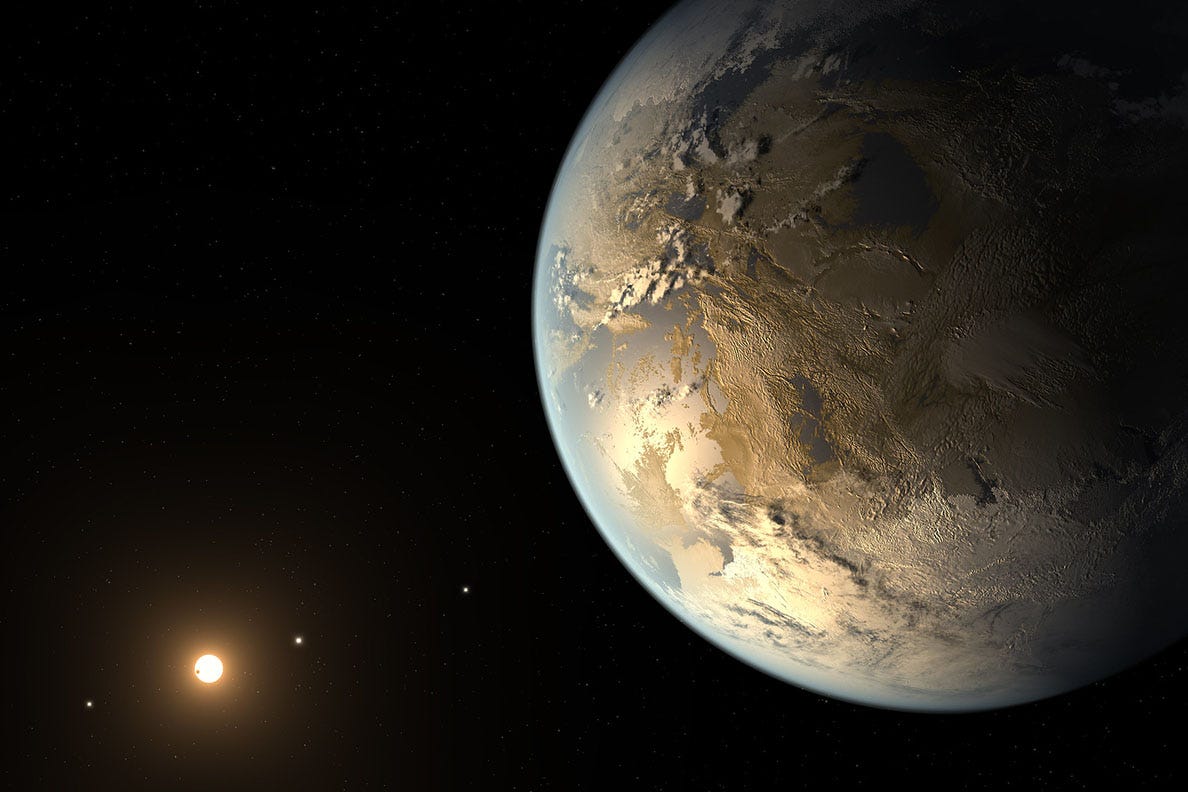
Researchers examined data from terrestrial exoplanets orbiting in the habitable zone around their stars, where temperatures allow liquid water to pool on their surface. Just a small percentage of the 4,500 exoplanets now known to orbit other stars are known to have conditions relatively friendly to life.
“Most important from the perspective of an observer searching for extrasolar life is that such a search might be executed most effectively with a focus on superhabitable planets instead of Earth-like planets. We argue that there could be regions of astrophysical parameter space of star-planet systems that could allow for planets to be even better for life than our Earth,” researchers describe in an article published in the journal Astrobiology.
Each of the planetary systems examined in this new study sit more than 100 light years from our family of planets.
It took nearly four billion years for complex lifeforms to develop, suggesting that longer-lived stars may be more likely to host planets awash in life. The Sun, and other G-type stars like it, live for about 10 billion years. This study also examined planets abound cooler, less-massive K-type stars, which exist for between 20 and 70 billion years, allowing plenty of time to life to develop.
However, extremely old planets cool all the way through to their core, reducing or eliminating the planetary magnetic field protecting those worlds from harmful radiation. This study suggests planets between five and eight billion years old may be likely worlds to target in the search for life.
Other characteristics of exoplanets affecting the possible development of life include the mass and size of a chosen world. This new study suggests exoplanets 10 percent larger than the Earth would develop more land area than our own world. A planet 50 percent more massive would hold onto its inner heat longer than Earth, retaining its magnetic field and atmosphere for significantly more time than our home world. The video below shows an interview with Dr. Natalie Hinkel of the Southwest Research Institute, discussing how phosphorous can be used to find exoplanets likely to have developed life.
Temperatures are also a critical factor when looking for life where life may have developed. Exoplanets averaging 20 Celsius (68 Fahrenheit) — slightly warmer than Earth — were found to be wetter, more humid, and even friendlier to life than the world we call home.
Over billions of years, the habitability of Earth has fluctuated over time. Mass extinction events were triggered, from time to time, by asteroid impacts, and the (possibly) even nearby supernova explosions.
An ideal world, researchers speculate, will balance conditions toward great biodiversity, with occasional struggles for survival to drive natural selection.
“However, not every superhabitable planet may produce intelligent life because these variations might have either been too small for life to advance toward higher complexity or too large for life to keep up and instead become extinct,” researchers speculate.